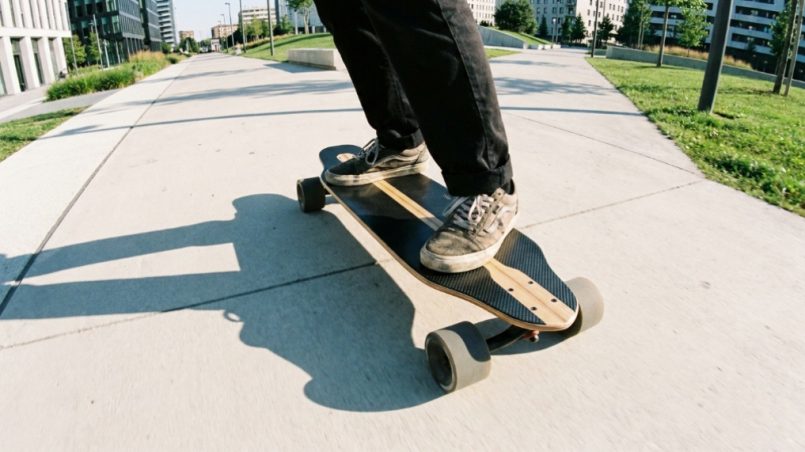
Most adults who want to start skating run into the same problem: the cheap board at the big-box store feels unstable, while a pro setup at the skate shop costs more than they expected to spend on a hobby they have not tried yet. The good news is that a durable skateboard for beginners does not have to be expensive or hard to ride. It just has to be built with the right components. This guide explains what actually makes an adult board durable, how to judge whether it will be easy to ride, and where to draw the line on price without buying something you will outgrow in a month.
Key Takeaways
- A complete skateboard in the 7.75–8.25 inch width range suits most adult beginners; wider decks feel more stable, narrower ones are easier to flip.
- Deck construction matters more than graphics or brand. Seven plies of hard maple is the standard for a board that withstands adult weight and impact.
- Soft wheels (around 78A–87A) roll more smoothly on rough pavement and make learning noticeably easier than hard park wheels.
- You do not need to spend a lot, but avoiding no-name department store boards is worth it because their trucks, bearings, and bushings are usually the weak points.
- Fit matters as much as quality. A board that is too narrow or has trucks tightened too far will feel twitchy no matter how good the parts are.
What Makes a Skateboard Durable Enough for an Adult?
Durability on a skateboard comes down to four parts: the deck, the trucks, the wheels, and the bearings. Adults put more weight and force through a board than children do, so each component needs to hold up under real use rather than just look the part.
The Deck: Look for Seven-Ply Maple
Almost all quality skateboard decks are made from seven layers of hard maple pressed together with glue. This construction gives the board its pop and its resistance to snapping. Some decks use a mix of maple and other woods, or add a layer of fiberglass or carbon fiber for extra strength, but plain seven-ply maple is the reliable baseline.
Deck width also affects durability in practice. A wider deck spreads impact over a larger area and tends to survive heavy landings better than a very narrow one. If you weigh more than roughly 180 pounds, leaning toward the wider end of your preferred size range is a reasonable choice.
Trucks: The Most Overlooked Part
Trucks are the metal axles that attach the wheels to the deck. On cheap complete boards, trucks are often made from soft, low-grade aluminum alloy that bends or strips its threads after a few weeks of riding. Good trucks are forged or cast from stronger alloys and use hardened steel axles that resist bending.
For an adult beginner, standard-height trucks in a mid-range price bracket from a known skate brand are usually enough. You do not need ultralight racing trucks, but you should avoid unbranded trucks that come on $30 completes.
Wheels and Bearings
Wheels are measured by diameter and durometer (hardness). Larger, softer wheels roll over cracks and pebbles more easily. Bearings are rated with an ABEC number, but for skateboarding the ABEC rating matters less than build quality; a well-made bearing from a skate-specific brand often outperforms a generic high-ABEC bearing.
If you want a closer look at complete setups that combine these qualities at a reasonable price, this breakdown of a durable skateboard for beginners covers specific options and what each one is suited to.
Why “Easy to Ride” Is Mostly About Setup, Not Skill
A board that feels hard to ride is usually set up wrong, not ridden wrong. Three factors control how forgiving a skateboard feels under your feet.
Wheel Softness and Size
Hard wheels (99A and above) are designed for smooth skatepark concrete. On a sidewalk or asphalt street, they transmit every bump straight into your legs and can catch on small debris. Soft wheels in the 78A–87A range absorb that vibration and roll over rough ground far more comfortably. For an adult learning on real-world pavement, soft wheels make the first few weeks dramatically less frustrating.
Bushing Tightness
Bushings are the rubber cushions inside the trucks. Trucks tightened all the way down feel dead and unstable at the same time, because the board cannot lean naturally into a turn. Beginners often crank their trucks tight out of fear of wobbling, which actually makes balancing harder. Leaving bushings at a moderate tightness so the board can lean slightly gives you more control, not less. to stay safe while practicing your tricks, check out this guide on how elbow pads reduce falls and injuries in skateboarding.
Deck Width Versus Shoe Size
Riders with larger feet generally feel more comfortable on wider decks because their stance is more supported. Someone with a men’s size 11 shoe will usually feel more secure on an 8.25-inch deck than a 7.75-inch one. This is a comfort and stability issue, not a skill issue, and it is worth matching your board to your body rather than to what a friend rides.
How Much Should an Adult Beginner Actually Spend?
A reasonable budget for a first adult skateboard falls in the range of a mid-priced complete from a real skate brand, which is generally more than a department store board but far less than a custom pro setup. That middle ground is where durability and rideability actually overlap.
| Price Tier | What You Typically Get | Main Risk |
|---|---|---|
| Budget department store | Unbranded deck, soft trucks, plastic or low-grade wheels | Trucks bend, bearings seize, board becomes unsafe quickly |
| Mid-range complete | 7-ply maple deck, branded trucks, decent wheels and bearings | Rarely a bad choice; some stock wheels may still be too hard for rough streets |
| Custom or pro setup | Hand-picked deck, premium trucks, choice of wheels | More money than a beginner needs before knowing their preferences |
The practical advice: buy at the mid-range, and if the stock wheels are hard, swap them for soft ones. That single change often does more for rideability than upgrading anything else.
Common Mistakes Adults Make When Buying a First Board

Most beginner frustration traces back to a few predictable errors. Avoiding them saves money and time.
- Buying by graphic instead of specs. A deck’s artwork says nothing about its width, concave, or wood quality.
- Assuming all completes are ready to ride. Many are assembled, but the trucks may be overtightened and the bearings may be dry from storage.
- Going too narrow for stability. A narrow board flips more easily but feels twitchy while you are still learning balance.
- Ignoring wheel durometer. Hard wheels on rough pavement are the single most common reason beginners give up.
- Over-tightening trucks on day one. This removes the board’s natural turning ability and makes balancing harder, not easier.
Practical Setup Tips for Your First Week
Once you have the board, a few small adjustments make the learning curve gentler.
- Check that the truck hardware is snug but not crushed into the deck. You should see the bushings compress slightly, not flatten completely.
- Spin each wheel by hand. If a wheel stops almost immediately, the bearing may be overtightened or dry. A drop of bearing lubricant often fixes it.
- Start on smooth, flat surfaces such as an empty parking lot or a freshly paved path. Rough ground makes balance harder before you have the basics.
- Wear a helmet and wrist guards. Falls are part of learning, and the most common early injuries are wrist fractures.
- Practice pushing, coasting, and stopping before attempting turns or tricks. Board control comes from repetition, not from ambition.
Is a Durable Skateboard Worth It for a Beginner?
Yes, provided “durable” means well-built rather than expensive. A board with a solid maple deck, branded trucks, and appropriate wheels will last through the learning phase and beyond, while a cheap board often fails before the rider has learned anything. The trade-off is upfront cost: you pay a bit more now to avoid replacing a broken setup in a few weeks.
If budget is genuinely tight, the smarter move is to buy a mid-range complete and upgrade one part at a time rather than buying the cheapest board available and replacing all of it later.
Frequently Asked Questions
What size skateboard should an adult beginner buy?
Most adults are comfortable on a deck between 7.75 and 8.25 inches wide. If you have larger feet or want maximum stability while learning, lean toward 8.0 to 8.25 inches. Narrower decks are easier to flip but less stable for a beginner.
Are expensive skateboards more durable?
Not automatically. Price usually reflects better trucks, bearings, and wheel quality rather than deck strength alone. A mid-priced complete from a reputable brand is typically as durable as a premium setup for a beginner’s needs.
Do I need soft wheels to learn on?
Soft wheels are not mandatory, but they make riding on pavement much smoother and more forgiving. If you plan to skate mostly on streets, sidewalks, or rough asphalt, soft wheels in the 78A–87A range are a practical choice.
How long does a beginner skateboard last?
A well-built complete can last a year or more with regular riding before the deck loses its pop or the wheels wear down. Trucks and bearings often outlast the deck. Cheap boards may fail within weeks.
Can adults learn to skateboard on any board?
Technically yes, but the board affects how quickly you progress. A stable, properly sized board with soft wheels removes unnecessary difficulty, letting you focus on balance and control instead of fighting the equipment.
Conclusion
A durable skateboard for beginners comes down to four things: a seven-ply maple deck, trucks that will not bend, wheels suited to the surface you ride on, and a width that matches your body. You do not need to spend a fortune, but you do need to avoid the bottom tier of department store boards. Buy at the mid-range, swap the wheels if they feel too hard, keep your trucks at a moderate tightness, and start on smooth ground. Do that, and the board will support your learning instead of getting in the way.