February presents wonderful opportunities for exploring America’s architectural heritage. Winter crowds disappear, prices drop, and mild weather in southern states makes walking tours enjoyable. Historic buildings showcase their beauty without summer heat or holiday congestion.
Why Choose February for Architecture Tourism
Lower tourist numbers mean better access to popular historic sites. Additionally, many museums and historic homes offer winter discounts and special programming. Tour guides can spend more time answering questions and sharing detailed stories.
Southern destinations enjoy comfortable temperatures during February. Meanwhile, northern cities offer authentic seasonal atmosphere with festive winter charm. Therefore, architecture enthusiasts can choose climates matching their preferences.
Photography becomes easier without crowds blocking building facades. Natural winter light creates dramatic shadows highlighting architectural details. Moreover, indoor sites provide warming breaks during colder destination visits.
Charleston: Colonial and Anteblebellum Masterpieces
Charleston preserves America’s finest collection of colonial and antebellum architecture. The historic district features over 2,800 buildings predating 1945. Rainbow Row displays colorful Georgian townhouses from the 1740s along East Bay Street.
February temperatures average 60 degrees, perfect for extended walking tours. The Battery showcases grand antebellum mansions facing Charleston Harbor. These impressive estates demonstrate Greek Revival and Italianate architectural styles.
St. Michael’s Church, completed in 1761, exemplifies colonial church architecture. The building’s white steeple dominates the skyline as Charleston’s oldest surviving religious structure. Additionally, the Nathaniel Russell House features a remarkable three-story free-flying staircase.
The Aiken-Rhett House offers unique preservation showing buildings as discovered. Original slave quarters remain intact, providing complete historical context. Tours reveal how wealthy families lived alongside enslaved people within these architectural complexes.
Guided walking tours operate daily throughout February. The Preservation Society of Charleston leads specialized architecture-focused explorations. However, self-guided tours work well using detailed historic district maps.
Savannah: Squares and Victorian Elegance
Savannah’s 22 planned squares create America’s largest National Historic Landmark District. Each square features different architectural styles surrounding beautiful green spaces. February brings early azalea blooms with comfortable 65-degree temperatures.
The Cathedral of St. John the Baptist demonstrates French Gothic Revival architecture. Twin spires reach skyward while stained glass windows illuminate ornate interiors. This cathedral, built between 1873 and 1896, remains architecturally significant.
Forsyth Park anchors the Victorian District with its famous fountain. Surrounding mansions showcase Italianate Revival and Second Empire styles. The Mercer-Williams House gained fame from “Midnight in the Garden of Good and Evil.”
River Street features restored 19th-century cotton warehouses. These industrial buildings demonstrate successful adaptive reuse as restaurants and shops. Additionally, the Owens-Thomas House displays English Regency architecture with important historical slave quarters.
Trolley tours provide comprehensive overviews of architectural districts. However, walking tours allow closer examination of architectural details. Therefore, combining both tour types creates ideal experiences.
New Orleans: French Quarter and Garden District
New Orleans offers unmatched architectural diversity from multiple cultural influences. The French Quarter contains America’s finest Spanish colonial buildings. Ironwork balconies and hidden courtyards define this historic neighborhood’s character.
February coincides with Mardi Gras season, adding festive atmosphere. Temperatures hover around 68 degrees for comfortable exploration. Nevertheless, booking accommodations early becomes essential during carnival celebrations.
St. Louis Cathedral dominates Jackson Square as the nation’s oldest continuously active cathedral. The Cabildo and Presbytère showcase Spanish colonial governmental architecture flanking the cathedral. These buildings now house Louisiana State Museum collections.
Garden District mansions display antebellum Greek Revival and Italianate styles. Magazine Street stretches six miles featuring architectural variety from shotgun houses to grand estates. Moreover, preservation efforts maintain authentic details throughout the district.
The French Market area demonstrates Creole architectural influences. Stucco-covered buildings with European design elements create unique American architecture. Additionally, courtyards hidden behind street facades reveal private architectural spaces.
St. Augustine: America’s Oldest City
St. Augustine, founded in 1565, represents the nation’s oldest continuously occupied European settlement. Spanish colonial architecture dominates the historic district. February temperatures reach pleasant 70-degree highs with minimal rainfall.
Castillo de San Marcos, a 17th-century fortress, demonstrates Spanish military architecture. The structure uses coquina shell stone that absorbed cannonball impacts. This fortress successfully withstood multiple sieges throughout colonial history.
Flagler College occupies the former Ponce de Leon Hotel building. This 1888 Spanish Renaissance Revival masterpiece features Tiffany stained glass. Tours showcase ornate architectural details and successful adaptive reuse.
The Colonial Quarter includes reconstructed buildings showing 16th through 18th-century construction methods. Additionally, the Oldest Wooden Schoolhouse survives as rare 18th-century vernacular architecture. These structures provide hands-on architectural education.
St. George Street offers pedestrian-only access to numerous historic buildings. Spanish colonial homes feature tabby construction using oyster shells. Therefore, visitors experience unique regional building materials and techniques.
Boston: Revolutionary Architecture and Beacon Hill
Boston preserves exceptional colonial and Federal-period architecture despite February cold. Average temperatures reach 38 degrees requiring warm clothing for outdoor tours. Nevertheless, numerous indoor architectural sites provide warming opportunities.
The Freedom Trail connects 16 historically significant sites. The Old State House, built in 1713, showcases British colonial governmental architecture. Paul Revere’s House from 1680 stands as downtown Boston’s oldest surviving building.
Beacon Hill features Federal-style rowhouses with distinctive characteristics. Purple windowpanes resulted from manganese oxide reacting with sunlight over centuries. Brick sidewalks and gas lamps complete the historic streetscape atmosphere.
Trinity Church in Copley Square exemplifies Richardsonian Romanesque architecture. H.H. Richardson designed this 1877 masterpiece influencing American church architecture nationwide. The Boston Public Library across the square demonstrates Renaissance Revival style.
The Massachusetts State House displays Federal architecture with its golden dome. Charles Bulfinch designed this 1798 building crowning Beacon Hill. Additionally, the North End preserves narrow streets with 18th and 19th-century buildings.
Philadelphia: Birthplace of American Democracy
Philadelphia contains Independence Hall and numerous revolutionary-period structures. February temperatures average 41 degrees making indoor sites particularly appealing. However, hardy visitors appreciate smaller crowds at outdoor landmarks.
Independence Hall demonstrates Georgian architecture where founding documents were signed. Carpenter’s Hall showcases colonial guild architecture from 1770. These buildings anchor Independence National Historical Park’s architectural treasures.
Elfreth’s Alley preserves 32 houses built between 1728 and 1836. This residential street shows working-class colonial architecture rarely surviving in urban areas. The Elfreth’s Alley Museum interprets daily life within these historic structures.
Eastern State Penitentiary represents Gothic Revival prison architecture from 1829. This radical design influenced prison construction worldwide. Therefore, architecture students study this building’s innovative radial floor plan.
Society Hill contains the nation’s largest concentration of 18th-century architecture. Federal and Georgian townhouses line cobblestone streets. Additionally, Washington Square provides views of surrounding historic buildings.
Santa Fe: Pueblo Revival and Adobe Traditions
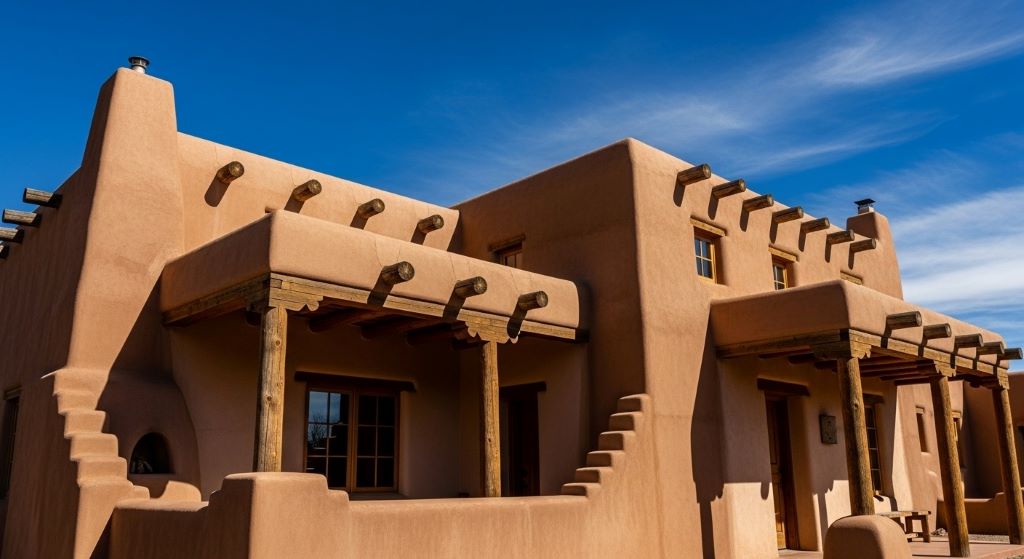
Santa Fe offers distinctive Pueblo Revival and Spanish colonial adobe architecture. February brings crisp mountain air with temperatures around 50 degrees. Snow-capped Sangre de Cristo Mountains provide dramatic backdrops for earth-toned buildings.
The Palace of the Governors, built around 1610, represents America’s oldest continuously occupied public building. Adobe construction demonstrates traditional Pueblo techniques adapted by Spanish colonizers. The portal features Native American vendors selling crafts.
San Miguel Chapel claims status as the nation’s oldest church building. Constructed between 1610 and 1626, thick adobe walls showcase early mission architecture. Original artwork and bells remain preserved inside this historic structure.
Canyon Road features galleries in converted adobe homes and studios. These structures demonstrate residential adobe architecture from various periods. Additionally, the New Mexico Museum of Art exemplifies Pueblo Revival style from 1917.
The historic plaza maintains traditional Spanish colonial town planning. Buildings surrounding the plaza showcase territorial-style architecture. Moreover, strict building codes preserve Santa Fe’s distinctive architectural character.
Washington DC: Neoclassical Monuments and Federal Buildings
Washington DC showcases monumental neoclassical architecture throughout the National Mall. February temperatures average 43 degrees with occasional snow enhancing building photography. Indoor Smithsonian museums provide architectural interest with climate control.
The Capitol Building demonstrates neoclassical design with its iconic dome. This structure evolved through multiple construction phases beginning in 1793. Tours reveal ornate interior spaces and architectural details.
The White House represents Federal-style architecture adapted for executive purposes. James Hoban designed this 1800 building based on Irish Georgian precedents. Additionally, Lafayette Square features surrounding historic townhouses.
Georgetown preserves Federal-period rowhouses along brick sidewalks. This neighborhood predates Washington’s founding with buildings from the 1750s. The Old Stone House from 1765 survives as the city’s oldest building.
Union Station exemplifies Beaux-Arts architecture on a grand scale. This 1908 building features soaring vaulted ceilings and classical details. Therefore, even transportation infrastructure demonstrates architectural significance.
Planning Your February Architecture Adventure
Research opening hours before visiting since some sites reduce winter schedules. Additionally, booking guided tours in advance guarantees expert architectural interpretation. Many organizations offer winter lecture series complementing site visits.
Comfortable walking shoes remain essential regardless of chosen destination. Layered clothing accommodates temperature changes between outdoor and indoor exploration. Moreover, photography equipment should include wide-angle lenses for building facades.
Consider purchasing city heritage passes for multiple site access. These passes typically offer significant savings versus individual admissions. Furthermore, many include priority entry and behind-the-scenes access opportunities.
Download architecture walking tour apps for self-guided exploration. These digital guides provide historical context and architectural details. However, in-person tours offer opportunities for questions and discussions.
Conclusion
February creates ideal conditions for exploring America’s historic architecture. Southern destinations offer comfortable temperatures while northern cities provide authentic winter atmosphere. From Charleston’s Rainbow Row to Santa Fe’s adobe buildings, diverse architectural styles await discovery. Lower crowds, reduced prices, and special winter programming make February perfect for architecture tourism. Therefore, history and architecture enthusiasts should plan their February adventures to these remarkable destinations.
Frequently Asked Questions
What is the warmest destination for February architecture tours in the USA?
St. Augustine, Florida offers the warmest February weather with 70-degree highs while showcasing Spanish colonial architecture. Alternatively, Santa Fe provides 50-degree temperatures with unique adobe buildings and mountain scenery.
Are historic houses and museums open in February?
Yes, most historic sites remain open year-round with some reducing hours during winter. Always check specific site schedules before visiting since some smaller museums close Mondays or Tuesdays regardless of season.
How long should I plan for a historic architecture tour vacation?
Plan three to five days per city for thorough architectural exploration. This timeframe allows walking tours, museum visits, and photography opportunities without rushing. Weekend trips work for nearby destinations.
Can I take photographs inside historic buildings?
Photography policies vary by site, with many allowing non-flash photography inside. Some locations prohibit interior photography or charge additional fees. Therefore, always ask permission before photographing inside historic structures.
What are the best apps for self-guided architecture tours?
Walking tour apps like GPSmyCity and local heritage apps provide excellent self-guided options. Many cities offer free apps through their convention bureaus or historical societies. Additionally, Google Maps includes historic site information and reviews.
Related Topics:
The beautiful and historic city of Hereford, literally hugged by the wonderful River Wye