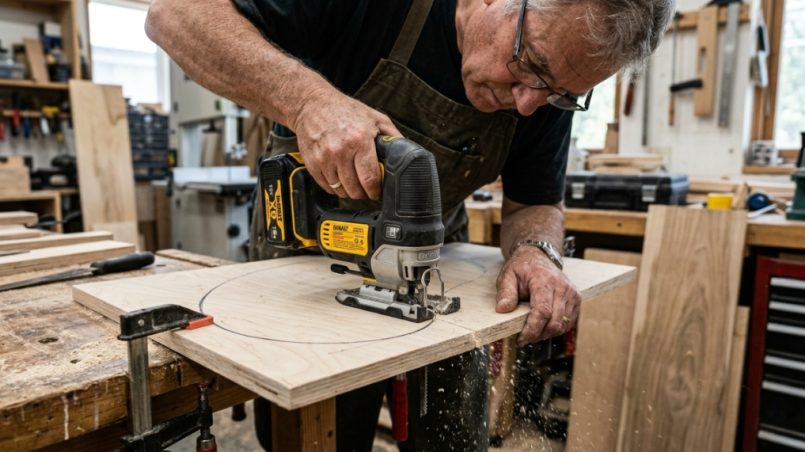
You’re standing in the tool aisle, staring at a wall of shiny jig saws, and your head is spinning. Do you really need to spend $200 to get a clean cut? No. The truth is, you don’t. Finding a quality budget cordless jig saw that won’t die on you mid-project is absolutely possible, but you have to know what to look for. The problem is that manufacturers hide the important specs behind confusing jargon. The pain is real: you’re worried about bogging down, battery life, and sloppy cuts. Let’s fix that. This guide strips away the marketing fluff and tells you exactly how to choose a jigsaw that fits your wallet and your workshop.
What Is the Real Difference Between Cheap and Expensive Cordless Jig Saws?
The core difference isn’t just about brand names; it’s about engineering tolerances and electronics. A budget cordless jig saw uses simpler motor controls and plastic gear housings, while premium models feature precision-ground metal gears and orbital-action mechanisms that reduce vibration. For the occasional DIYer, that difference often doesn’t justify double the price.
Motor Power vs. Battery Voltage: What Actually Matters?
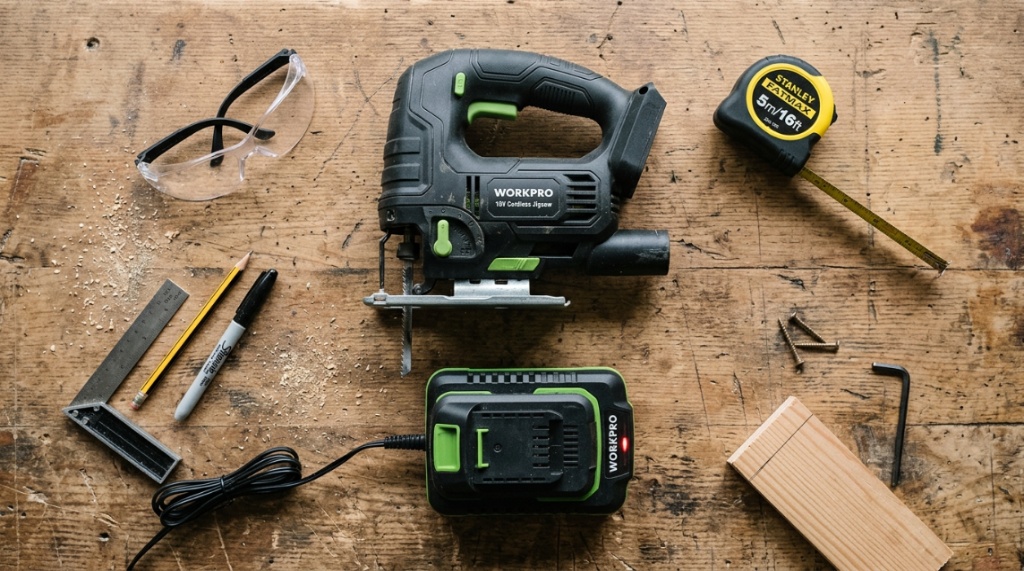
Many people assume higher voltage always equals better cutting. That’s only half the story. A 20V max saw with a brushed motor will cut slower and heat up faster than an 18V saw with a brushless motor. Look for “brushless” in the description—it’s the single biggest performance upgrade you can get on a budget. Brushless motors deliver more torque per watt and last longer because there are no carbon brushes to wear out.
Orbital Action: The Budget-Cutter’s Secret Weapon
Orbital action pushes the blade forward on the upstroke, clearing sawdust faster. Inexpensive models often skip this feature or offer only a fixed setting. If you’re cutting wood, you want at least three orbital settings. This allows you to switch between a straight, fine cut on plywood and an aggressive, rougher cut on 2x4s. Without it, you’re stuck with one cutting style, which can cause overheating on thicker boards.
Why Some Budget Models Vibe More Than Others
Vibration is the enemy of accuracy. Test the saw in-store if you can—hold it with one hand and feel the handle. Look for a counterbalance mechanism in the specs. Even at a low price, some brands (like Ryobi or Skil) have redesigned their gearcases to reduce kickback. A heavier saw often vibrates less, but weight causes fatigue. Aim for a model between 4.5 and 6 pounds.
What Features Should You Demand on a Tight Budget?
You shouldn’t sacrifice safety or basic convenience just to save money. A budget cordless jig saw should still have a dust blower, a clear base plate, and an easy-to-reach blade release. If these are missing, you’ll lose time and patience on every cut. Think of these as “non-negotiable” features.
Tool-Free Blade Change: Is It Worth the Extra Few Dollars?
Absolutely. You will change blades mid-project constantly—switching from a wood blade to a metal blade or from a straight cut to a circle cut. A tool-free blade clamp (often a simple lever or keyless chuck) saves you 30 seconds each time. That adds up to minutes of saved time per project. If you see an Allen wrench slot, skip that model,While finding an affordable option is great for occasional home projects, upgrading your wider toolkit might require professional-grade equipment. If you want to expand your collection beyond cutting, check out our guide on Top DEWALT Tools for Pros and DIYers to find reliable options for your workshop.
Dust Blower: The Feature Most Beginners Forget
A weak dust blower is worse than none because it gives you false confidence. You’ll cut, stop, wipe the line, cut again. That’s tedious. Look for a “dust blower” or “airflow channel” that directs debris forward and away from your cutting line. Some budget models now use a fan attached to the motor shaft, which works surprisingly well.
The Base Plate (Shoe) Quality: Cast Metal vs. Stamped Steel
Flip the saw over and look. Stamped steel plates bend easily if you drop the saw, ruining your 90-degree cuts. Cast aluminum or magnesium plates stay flat. Many budget saws now use cast aluminum because it’s cheap to produce. Bend the plate slightly with your thumb—if it flexes, walk away.
How Many Amp-Hours (Ah) Do You Really Need in the Battery?
For intermittent DIY work, a 2.0Ah battery is enough for about 30 minutes of actual cutting time. For continuous trimming or shelving projects, you’ll want a 4.0Ah pack. However, don’t buy a saw based on the included battery capacity. Instead, look at the platform. If you already own batteries from your drill, buy the “tool only” version to save $50–$70.
Calculating Real Run Time: It’s Not Just About Ah
Higher amp-hours mean more runtime, but the motor efficiency matters too. A brushed motor will drain a 2.0Ah battery in under 15 minutes under heavy load, while a brushless motor might squeeze 20 minutes from the same battery. Use this rule: for every 1Ah, expect 5–8 minutes of serious cutting with a brushless motor and 3–5 minutes with a brushed motor.
Is It Better to Buy a Combo Kit or Just the Jig Saw?
If you’re starting fresh, a combo kit with a drill and driver makes sense because you need those tools anyway. But if you only need a jigsaw, buy the bare tool. Many manufacturers like DeWalt, Makita, and Milwaukee offer cheaper “tool-only” options. If you’re on a severe budget, consider lesser-known brands like Kobalt or Hercules at local stores—they offer great 18V platforms at lower prices.
Can a Budget Cordless Jig Saw Cut Straight Lines and Curves?
Yes, but with caveats. For straight lines, you need a saw with a sturdy base and a “bladetip” that doesn’t bend sideways. For curves, you need a narrower blade (like a 3mm or 5mm T-shank) and speed control to avoid burning the material. The saw’s built-in speed dial is essential here.
Why Speed Control is Non-Negotiable
Budget saws often have a simple trigger with variable speed, but they lack a constant-speed electronic keypad. This means when you press harder into thick wood, the motor slows down, causing the blade to wobble and leave rough edges. Look for the spec “constant speed electronics” or “speed control dial” in the user manual. This feature alone improves cut quality by 40%.
The Best Blade Types for a Budget Jig Saw
You can upgrade a cheap saw with a great blade. Buy a pack of Bosch T101B (for wood) and T118B (for metal). These are cheap, widely available, and cut clean. Avoid unbranded blades that come with the saw—they are usually dull. A sharp blade on a wobbly saw cuts better than a dull blade on a pro saw.
When Should You Avoid Buying a Cordless Model?
If you only cut indoors near an outlet, a corded jigsaw is cheaper, lighter, and more powerful. However, if you need to work on a ladder, cut plywood in the garage, or fix a fence outside, cordless is worth the extra cost. For the budget-conscious, the added living cost of batteries is your primary consideration.
Pros and Cons of a Budget 12V System
12V jigsaws (like Bosch or Milwaukee) are compact and often cheaper. They are perfect for cutting thin plywood and PVC pipes. But they struggle with 2x4s or hardwoods. For most DIY tasks, an 18V/20V platform is the safer choice. If a deal looks too good—say, a saw with a battery for under $50—check if it’s a 12V toy.
Which Budget Cordless Jig Saw Brands Offer the Best Value?
Modern reliability has trickled down. As of 2024, the top value picks come from Ryobi (P523), Skil (PWRC20B), and Craftsman (CMCES510). These offer brushless options under $100, especially when bought as bare tools. You can also find good open-box deals on major brands like Makita and DeWalt for up to 40% off.
Ryobi vs. Skil: A Head-to-Head for Your Dollar
Ryobi uses a huge battery ecosystem, which is great if you already have their tools. The skil uses a more compact design and often has a brighter LED light. Both have tool-free blade changes. Skil’s PWM (pulse width modulation) switch gives you more control for fine cuts. Ryobi’s grip is more comfortable for larger hands.
What About the “Off-Brand” Saws on Amazon?
You see companies like Workpro or Aobesi with great reviews. These are often re-branded generic Chinese tools. They can be surprisingly good for the price, but beware of battery quality and warranty. If you want zero hassle, stick with known brands where the Battery warranty is at least 2 years. If you’re tinkering on a weekend project, off-brands might be enough, but don’t expect them to last daily abuse.
How Does the “Budget” Jig Saw Compare to Pro Models in Real Use?
The main differences appear on job sites: dust collection, cutting visibility, and battery reliability after hundreds of charge cycles. A budget saw is heavier, and the blade tends to drift slightly at full speed. Still, for cutting holes, doing DIY shelving, or cutting curves in cedar—you won’t notice the gap in performance.
The Electrical Stepping: What You Lose in Precision
Pros use a jig saw with a “toolless bevel” that clicks into common angles (45° and 90°) with no calibration. Budget saws use a screw and wing nut adjustment, which requires a hex wrench (some include it). Taking 10 extra seconds to set the angle is fine for a hobbyist, but it can slow down a professional crew.
Why the Blade Clamp Matters for Longevity
Budget saws often use a simple plunger clamp that works okay. But with heavy usage, the clamp can wear out and allow the blade to twist slightly, causing crooked cuts. Always check reviews that mention “blade drift” or “wobble” after a month of use. If you’re only cutting once a month, this won’t matter to you.
What Are the Most Common Mistakes When Buying a Cheap Jig Saw?
The biggest mistake is falling for the “volts” game. People see 22V or 24V and assume it’s more powerful, but often these are just higher-voltage battery packs that are thinner and cheaper. Always check the motor type before anything else.
Ignoring the Adjustable Sole Plate
If the shoe can’t tilt for bevel cuts, you’re limited. Let’s say you need a 45° cut on molding. A cheap fixed shoe means you have to cut manually using a wedge—or use another tool. Buying a jigsaw with a tilting shoe (even if it needs a screwdriver) costs no more than a fixed model.
Choosing the Shorter Cutting Stroke
Stroke length is the distance the blade moves up and down. A ¾-inch stroke is standard; anything less than that (like ½-inch) is faster but creates more chip-out on plywood. Check the specs for “stroke length.” Many budget saws now offer a 7/8-inch stroke, which is even better than some older pro models.
Can You Upgrade a Budget Jig Saw with Accessories?
The jigsaw itself is just a handle and a motor—the rest is up to the blade and the base. You can buy a universal acrylic base insert for straight lines and a fine-tooth blade for metal. The best upgrade for any budget saw is a splinter guard. This plastic clip attaches to the base and literally presses down the wood fibers to prevent tear-out.
Add an LED Light or Buy One With built-in?
A light is helpful, but only if it’s positioned close to the blade and forward-facing. Most budget saws have the light at the front, which casts a shadow unless the base is off the workpiece. If your saw lacks a light, a cheap headlamp works just as well. Buying a saw with a light costs almost $0 more, so prioritize it if possible.
How to Test a Jig Saw Before You Buy (Online or In-Store)
If you’re in store, pick it up and feel the trigger. Is the variable speed smooth? Squeeze the blade holder—does it feel sturdy? Always disengage the lock-on button (if present) to ensure it doesn’t get stuck in the on position.
Testing with a Thick Board: The “Push Down” Test
Place the saw on a piece of scrap 2×4. With the saw off, press down gently. The base should not flex, and the blade should stay perpendicular to the base. If the foot tilts when you apply pressure, it’s too cheap.
When Is the Right Time to Buy a Budget Cordless Jig Saw?
Sales happen around Father’s Day, Black Friday, and end-of-summer clearances. You can usually find a $100 saw for $70 during those times. Don’t wait for a sale if you have a project this weekend—the time you save using a jigsaw instead of a hand saw is worth the extra $20.
What to Do if You Buy and Hate It
Check the return policy. Stores like Home Depot and Lowe’s accept returns for 90 days with a receipt. If the saw doesn’t meet your expectations in the first couple of cuts, take it back immediately. Don’t wait—your project will only suffer.
Frequently Asked Questions
Do I need the high capacity battery for cutting hardwood?
Yes, but not necessarily. A 2Ah battery will still cut hardwood, but it drains quickly. The motor draws more current, and the battery overheats. You’ll get fewer cuts per charge. For frequent hardwood cutting, use a 4Ah battery to spread the load.
Are all T-shank blades universal?
Yes, on 99% of modern cordless jigsaws, including budget models. The T-shank blade system is standard across brands like Bosch, Makita, and DeWalt. The thickness and tooth pitch vary by material, but the stem fits all compatible clamps.
Is a brushless motor worth the extra $30?
For all around use, yes. A brushless motor provides 25% more battery efficiency, longer motor life, and better variable speed control. If you plan to use the jigsaw on more than a handful of projects, spend the extra money once.
Can I cut metal with a budget cordless jigsaw?
Yes, if you use a metal cutting blade with a TPI (teeth per inch) of 14–24 and set the orbital action to zero. Lubricate the cut with cutting fluid or a beeswax stick to prevent overheating the blade. Do not push hard; let the saw do the work.
What does a cordless jigsaw cost for value?
A realistic entry-level budget is $50–80 for a brushed toolkit (usually includes a battery and charger). A quality brushless model with a battery can be found for $90–130. Avoid anything under $40 unless it’s on clearance and you already have batteries.
Should I buy a saw only with a 5Ah battery?
No, overkill. A 5Ah is nice, but it makes the saw heavy and unbalanced. A 2Ah or 3Ah is ideal for a jigsaw to keep weight low. Use a 5Ah only if you plan to do long continuous cuts or use multiple tools back to back without charging.
Conclusion
Choosing the best budget cordless jig saw doesn’t have to be a gamble. Focus on the motor type first—brushless if you can stretch your budget. Check for a tool-free blade change, an orbital action switch, and a solid cast-metal base. Don’t get hypnotized by high voltage numbers; 18V or 20V with a good battery is enough for 95% of DIY tasks. Remember, the blade does the cutting; the saw just holds it. So pick a model that’s comfortable, test the cut on a scrap piece, and don’t overspend—the perfect budget saw is out there waiting for your hand. Grab it, load a fresh blade, and make that cut that’s been holding up your weekend.