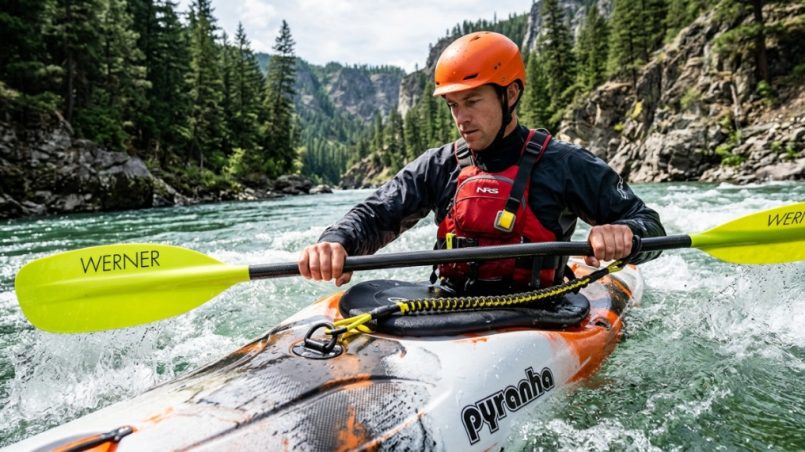
Imagine you are two miles into a Class II river run, the current is picking up, and you brace for a small wave train. You brace hard, your board tilts, and suddenly your paddle slips out of your hand. In the time it takes you to blink, that expensive carbon fiber shaft is bobbing downstream, well out of reach. This scenario is the single most frustrating moment for any river paddler. The solution isn’t just better grip tape; it is understanding exactly how to choose a secure paddle leash Colorado and how to attach it for zero-fail performance. This guide walks you through the physics, the hardware, and the practical techniques used by Colorado river veterans to ensure your paddle stays exactly where it belongs: in your hand.
What Makes River Paddling Different From Flat Water for Paddle Security?
River paddling introduces unpredictable lateral forces, submerged obstacles, and whitewater turbulence that flat water never demands. On a calm lake, a loose paddle might float next to you. On a river, the current drags it into rocks, undercuts, and strainers within seconds.
The Physics of a River Current on a Loose Object
Water moving at just five miles per hour exerts significant drag on a paddle shaft. Once the paddle separates from your hand, the current grabs the wider blade and yanks it downstream faster than you can swim. Unlike flat water, you cannot simply turn around and retrieve it without risking your boat or your body. This is why a standard coiled surf leash, designed for wave impact zone retrieval, often fails in river environments.
Why River Leashes Must Handle Abrasion
Rivers are abrasive environments. Every time your board drags across a gravel bar or your leash rubs against a sharp rock, standard webbing can fray. A secure paddle leash for Colorado rivers must feature heavy-duty nylon webbing or protected urethane cordage that survives repeated scrapes against granite and sandstone.
The Issue of Snagging on River Features
Flat water leashes often have bulky connectors that catch on brush, root wads, and rock cracks. River-specific leashes use low-profile swivels and streamlined attachment points to prevent snagging. If your leash snags, you risk being pulled off balance or pinned against an obstacle.
Which Type of Paddle Leash Works Best for Moving Water?
The best river paddle leash uses a cuff-style wrist attachment combined with a flexible, high-tension coil or a straight urethane tether. Straight tethers offer less drag in current, while coils prevent the line from dragging in the water behind you.
Coil Leashes: Pros and Cons for Rivers
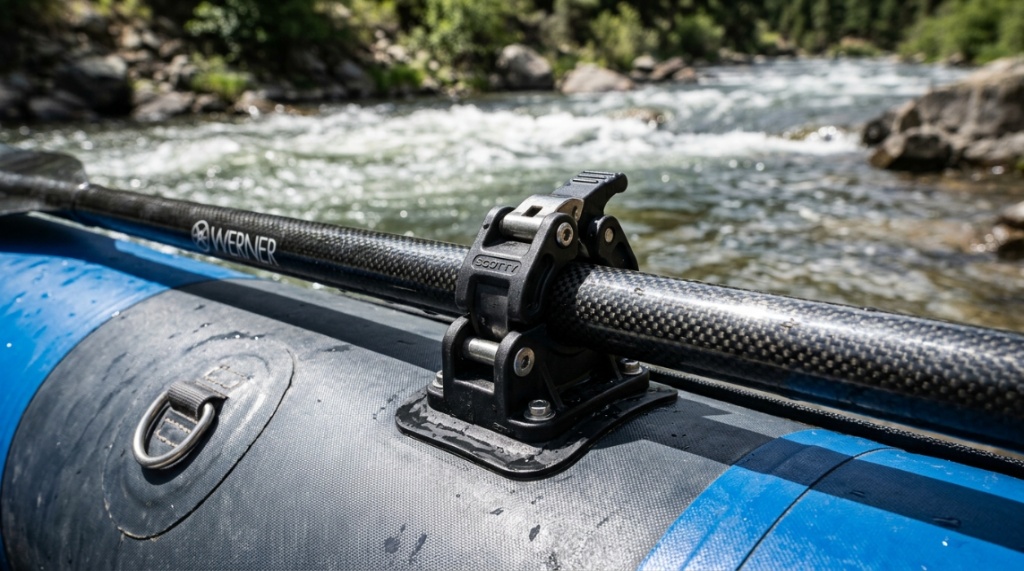
Coil leashes keep the line tight against the paddle shaft, reducing the chance of it wrapping around your legs or getting caught on submerged branches. However, cheap coils tend to lose their memory and stretch out after a few days of sun exposure. For Colorado rivers with intense UV at high altitude, look for a coil made from marine-grade silicone rather than standard plastic.
- Pros: Stays off the bottom, less tangling, compact.
- Cons: Can lose elasticity in cold water, may snap if nicked.
Straight Urethane Leashes: Why Some Guides Prefer Them
Professional river guides often use a short, straight urethane leash (around 24 to 30 inches). These offer zero stretch, meaning the paddle does not recoil violently toward you if it releases. They also slide over rocks more easily than coils. The trade-off is that they can drag on the surface, creating a small amount of resistance.
Breakaway vs. Non-Breakaway Options
For whitewater and high-consequence rivers, a breakaway or quick-release leash is strongly recommended. If your paddle gets trapped under a rock or in a strainer, a non-breakaway leash can tether you to a stuck object, creating a dangerous pin situation. Breakaway leashes use a magnetic release or a weak link that snaps under extreme tension, freeing your hand instantly.
Before launching onto moving water, always double-check your safety equipment. Just as you would research your gear using our Fishing Rod and Reel Combo Reviews Before Buying guide to ensure reliable performance, securing your paddle prevents sudden losses in rough currents.
How Do You Properly Attach a Paddle Leash for Maximum Security?
Proper attachment involves two distinct connections: the cuff around your wrist (or paddle shaft) and the anchor point on your board. Getting either wrong turns a good leash into a liability.
The Wrist Cuff: Fit and Position
The cuff should fit snugly enough that it cannot slide over your hand, but loose enough that it does not restrict blood flow. Position it between your wrist bone and your hand. If the cuff rotates, the hook or clip may press into your ulnar nerve, causing numbness during long paddles.
The Board Anchor: Where to Connect
Most river boards have a dedicated leash plug placed near the tail. However, for river paddling, many experts recommend using a rail mount or a deck bungee attachment point closer to the center of the board. This prevents the leash from dragging behind you where it can catch on rocks while sidesurfing or ferrying across channels.
Connector Hardware: Clips, Swivels, and Safety
Use a stainless steel carabiner with a locking gate rather than a cheap stamped hook. A swivel is non-negotiable for rivers; without it, the leash twists, creating tangles that shorten its effective length. Inspect each swivel for grit after every trip, as sand from Colorado rivers can seize a bearing instantly.
| Hardware Type | River Suitability | Common Failure Point |
|---|---|---|
| Plastic clip | Poor | Brittle in cold, cracks under load |
| Stainless carabiner (locking) | Excellent | Gate spring corrosion if not rinsed |
| Nylon webbing loop | Good | UV degradation over 12 months |
| Magnetic breakaway | Very Good | Magnet weakening with debris buildup |
Why Is a Secure Paddle Leash Colorado-Specific?
Colorado rivers present unique challenges, including high-altitude UV exposure, cold snowmelt water, and rocky riverbeds with sharp metamorphic stone. These factors demand a leash built for extremes.
UV Resistance at Altitude
Paddling at 8,000 feet means your gear receives significantly more ultraviolet radiation than at sea level. Standard leash webbing can become brittle and snap after just two seasons. Colorado-specific leashes use UV-stabilized Kevlar or Dyneema blends that resist solar degradation. Always store your leash out of direct sunlight when not in use.
Cold Water Flexibility
Snowmelt from the Rockies often runs below 50 degrees Fahrenheit (10 degrees Celsius) even in summer. Leash materials that stiffen in cold water reduce responsiveness and can fail to stretch properly when loaded. A secure paddle leash Colorado designed for cold-water performance uses thermoplastic polyurethane (TPU) that remains supple at low temperatures.
Rock Abrasion on Colorado Granite
Colorado riverbeds are notoriously rough. The paddle leash must resist cutting against sharp quartzite and granite edges. Look for leashes with an outer abrasion sleeve or braided Kevlar covering. A standard fabric sleeve will shred within one trip down the Arkansas River or Clear Creek.
Which Leash Length Is Safest for River Paddling?
A river paddle leash should measure between 24 and 36 inches at full extension. Shorter leashes reduce drag and tangling risk, but longer leashes allow greater freedom of movement for cross-bow strokes and bracing.
Short Leashes (24–30 Inches)
These are ideal for whitewater and technical creeks. They keep the paddle very close to your hand, reducing the chance of the paddle drifting behind a rock while you maneuver. The disadvantage is less reach for extended paddle strokes, which can strain your shoulder over a full day run.
Medium Leashes (36–48 Inches)
This length is popular for class II and III river running. It offers a balance between freedom of movement and control. However, the extra length creates more slack that can dip into the water, creating drag. Use a coiled variant to keep the excess line out of the current.
Long Leashes (Over 48 Inches)
Long leashes are generally not recommended for rivers. The excess line creates a severe entanglement hazard. If you fall, the long leash can wrap around your legs or your board, making a self-rescue significantly harder. Reserve these for flat water or open ocean paddling where entanglement risk is lower.
How Often Should You Inspect and Replace Your River Paddle Leash?
Inspect your leash before every paddling session, and replace it at the first sign of fraying, stiffness, or corrosion. A river environment is unforgiving to damaged gear.
Visual Inspection Checklist
- Webbing or cord: Look for fuzzy strands, cuts, or discoloration. Sun-bleached cordage is weaker.
- Cuff stitching: Check all seams where the cuff attaches to the cord. Loose stitches are a red flag.
- Swivel: Rotate it manually. If it sticks or grinds, replace the leash immediately.
- Clip or carabiner: Ensure the gate closes fully and locks. Any wobble in the hinge means failure is imminent.
When to Replace Based on Use
For a paddler who runs rivers twice a week during the Colorado season (May through October), expect to replace a high-quality leash every 12 to 18 months. Heavy use on abrasive rivers like the Arkansas or the Gunnison may cut that to a single season. Never wait for a leash to fail before replacing it.
Storage Practices That Extend Leash Life
Rinse your leash with fresh water after every river trip, especially if you paddled in muddy or mineral-heavy water. Dry it completely in the shade before coiling. Salt and silt crystals act like sandpaper inside the swivel and webbing fibers. Store your leash loosely coiled, not tightly wrapped, to prevent memory set in the coil.
Can You Use a Surf Leash for River Paddling?
You can, but it is not recommended. Surf leashes are designed for the open ocean, not for abrasion, snagging, and current loading found in rivers. Using one increases your risk of losing your paddle or creating a dangerous entanglement.
Key Differences Between Surf and River Leashes
Surf leashes are typically longer (6 to 10 feet) and use a rail saver that wraps around the board. River leashes are shorter, use wrist cuffs or paddle shaft wraps, and prioritize abrasion resistance over stretch absorption. The attachment hardware also differs: surf leashes often use plastic plugs that corrode in freshwater environments.
Risks of Using a Surf Leash on Rivers
- Excessive length creates entanglement hazards.
- Thin cordage snaps on sharp rocks.
- Non-rotating clips cause twisting and tangling.
- Lack of breakaway feature creates pinning danger.
When a Surf Leash Might Be Acceptable
If you are paddling a very gentle, wide, flat river with no rocks, no strainers, and very slow current, a surf leash will work as a temporary solution. However, for any river with moving water, invest in a dedicated river paddle leash. The cost is modest compared to the price of losing a paddle or dealing with a rescue situation.
How Do You Prevent Paddle Leash Tangles During River Runs?
Tangles happen when the leash has too much slack, the swivel is seized, or the paddle rotates around the leash axis. Prevention starts with gear choice and continues with paddling technique.
Use a Swivel at Both Ends
A single swivel at the board end is not enough. The paddle end also needs a rotating connection. Without a swivel at the paddle, each rotation of the shaft during a stroke twists the leash. Over a few minutes, this creates a tight knot. High-quality river leashes include a built-in swivel at the cuff attachment point.
Keep Leash Tension During Paddle Strokes
After every few strokes, especially after a brace or a cross-bow stroke, check for slack. A quick flick of the wrist can recoil the leash and prevent it from dipping into the water where it can catch on your foot or a submerged rock. This habit takes practice but eliminates most tangles.
Trim Excess Length
If your leash is too long, you can carefully shorten it by tying a knot in the webbing near the board end, provided the webbing is heat-sealable (most urethane and nylon are). Never cut a coiled leash shorter; this ruins the coil tension and is unsafe. Instead, buy the correct length for your needs.
Frequently Asked Questions
What is the best material for a river paddle leash?
The best material is a braided Dyneema or Kevlar core with a urethane or TPU outer jacket. This combination offers high tensile strength, excellent abrasion resistance, and flexibility in cold water. Avoid simple nylon webbing for river use.
How tight should the wrist cuff be on a paddle leash?
The wrist cuff should be snug enough that you cannot slide your hand out easily, but loose enough to fit one finger between the cuff and your skin. It must not restrict circulation or cause numbness during extended paddling sessions.
Can a paddle leash save me from losing my board too?
Yes, many river paddle leashes attach to the board, so if you lose your grip on the board in a rapid, the leash keeps both your paddle and your board connected to you. However, always use a separate board leash for maximum security in high-consequence water.
Is a coiled or straight leash better for whitewater?
A coiled leash is generally better for whitewater because it keeps the line off the bottom and reduces drag. However, some expert paddlers prefer a short, straight urethane leash for its durability and clean profile. Choose based on your personal preference for recoil behavior.
How do I clean a river paddle leash after a muddy trip?
Rinse the entire leash, including the swivels and clips, with fresh water immediately after your trip. Use a mild soap to break down silt and mud. Dry it thoroughly out of direct sunlight before storing. Lubricate swivels with a silicone-based spray if they feel gritty.
What should I do if my paddle leash snaps on the river?
Stay calm. If you are in current, focus on stabilizing your board first. If the paddle is still floating nearby, try to paddle toward it using hand strokes. If it is gone, use a spare paddle if you have one, or signal for assistance. Always carry a spare leash in your dry bag for emergencies.
Can I make my own river paddle leash at home?
While possible, it is not recommended. Homemade leashes often fail at the stitching or swivel points, leading to gear loss. The stress of river currents and abrasion demands professional-grade materials and construction. Commercially made leashes are tested for safety and durability.