Industrial operations depend on reliable equipment that can withstand demanding conditions and heavy loads. When securing rope in critical applications, choosing the right clamps becomes a matter of safety, efficiency, and cost-effectiveness. The wrong selection can lead to equipment failure, workplace accidents, and significant financial losses.
Understanding how to properly select heavy duty rope clamps requires knowledge of materials, load requirements, environmental factors, and industry standards. This comprehensive guide walks you through every consideration you need to make an informed decision. Whether you’re rigging equipment, securing cargo, or installing safety systems, the information here will help you choose clamps that perform reliably under pressure.
Making the right choice isn’t just about buying the strongest available option. It involves matching specific clamp characteristics to your unique application requirements. By the end of this article, you’ll understand exactly what to look for and how to ensure your selection meets both safety standards and operational needs.
Understanding Industrial Rope Fasteners and Their Applications
Industrial rope fasteners serve as critical connection points in countless applications across manufacturing, construction, maritime, and transportation industries. These devices secure rope ends, create loops, join rope sections, and attach rope to other equipment or structures.
The most common applications include crane rigging, where fasteners must hold loads weighing thousands of pounds. In these scenarios, failure isn’t an option. Similarly, cargo securing operations depend on reliable fasteners to keep shipments stable during transport. Mining operations use them for hoisting equipment and materials from deep excavations.
Construction sites employ rope fasteners for scaffolding, safety lines, and material lifting. Maritime industries rely on them for mooring vessels, securing deck cargo, and operating ship equipment. Each application presents unique challenges regarding load types, environmental exposure, and safety requirements.
Furthermore, entertainment and stage rigging requires fasteners that can support lighting equipment, scenery, and sometimes even performers. The consequences of failure in these settings extend beyond property damage to potential loss of life. Therefore, selecting appropriate fasteners becomes a critical safety consideration.
Material Considerations for Load Bearing Clamps
The material composition of load bearing clamps directly impacts their strength, durability, and suitability for different environments. Understanding material properties helps you match clamps to your specific conditions.
Stainless steel clamps offer excellent corrosion resistance, making them ideal for marine environments or facilities exposed to moisture and chemicals. They maintain their strength over time despite exposure to harsh elements. However, stainless steel costs more than other options, which becomes significant when outfitting large operations.
Galvanized steel provides a good balance between strength and corrosion resistance at a lower price point. The zinc coating protects the underlying steel from rust and degradation. This option works well for indoor applications or outdoor use in moderate climates. Nevertheless, the galvanized coating can wear away over time in highly corrosive environments.
Aluminum clamps weigh significantly less than steel alternatives while still offering respectable strength. This characteristic makes them valuable in applications where weight reduction matters, such as aerospace or mobile rigging equipment. Additionally, aluminum naturally resists corrosion through the formation of a protective oxide layer.
Carbon steel delivers maximum strength at the lowest cost. These clamps excel in controlled indoor environments where corrosion isn’t a concern. Many industrial facilities choose carbon steel for applications involving extreme loads where corrosion protection isn’t necessary.
Malleable iron clamps provide durability and impact resistance. They handle shock loads better than some other materials, making them suitable for dynamic applications. However, they require proper coating or plating to prevent rust in exposed conditions.
Load Capacity and Safety Factor Requirements
Determining appropriate load capacity represents the most critical aspect of clamp selection. Underestimating required capacity leads to equipment failure and potentially catastrophic accidents. Overestimating wastes money on unnecessarily robust equipment.
Start by calculating the maximum working load your application will experience. This includes not just the weight of materials being moved but also dynamic forces from swinging, sudden stops, or environmental factors like wind. Dynamic loads can multiply static weight by factors of two or more.
Apply an appropriate safety factor to your maximum working load. Industry standards typically require safety factors between 3:1 and 5:1 for lifting applications. This means a clamp rated for 5,000 pounds should only be used for working loads up to 1,000 or 1,667 pounds, depending on the safety factor applied.
Consider that manufacturers rate clamps based on ideal conditions with new equipment and proper installation. Real-world conditions include wear, corrosion, and potential installation errors. Therefore, conservative rating ensures reliability even when conditions aren’t perfect.
Check whether ratings account for straight pulls or angular loads. Loads applied at angles reduce effective capacity. A clamp might handle 2,000 pounds in a straight pull but only 1,200 pounds when loaded at a 45-degree angle. Understanding these derating factors prevents overloading.
Additionally, verify whether temperature affects capacity. Extreme cold can make some materials brittle, while high heat reduces strength. If your application involves temperature extremes, ensure the clamp maintains adequate capacity across your operating range.
Rope Compatibility and Diameter Matching
Clamps must properly fit the rope diameter and construction type you’re using. Mismatched combinations compromise holding strength and can damage rope fibers, leading to premature failure.
Measure your rope diameter accurately. Wire rope is measured across the widest point, including any outer strand protrusions. Synthetic rope is measured at the actual body diameter. Using rope that’s too small for a clamp allows slippage. Using rope that’s too large prevents the clamp from closing properly.
Consider rope construction when selecting clamps. Wire rope requires clamps designed specifically for steel cable, with saddles and U-bolts that distribute pressure without crushing individual strands. Synthetic rope needs different clamp designs that grip without cutting fibers. Braided rope behaves differently from twisted rope under clamping pressure.
Some clamps work with multiple rope diameters through adjustable designs. While versatile, these may not grip as securely as clamps sized for a specific diameter. For critical applications, choose clamps specifically matched to your rope size.
Furthermore, account for rope condition. Worn or damaged rope has reduced strength and may not grip as securely in clamps. Inspect rope regularly and replace it according to manufacturer recommendations. Never use damaged rope in critical load-bearing applications.
Design Types and Their Specific Advantages
Different clamp designs suit different applications. Understanding the strengths and limitations of each type helps you select the right configuration for your needs.
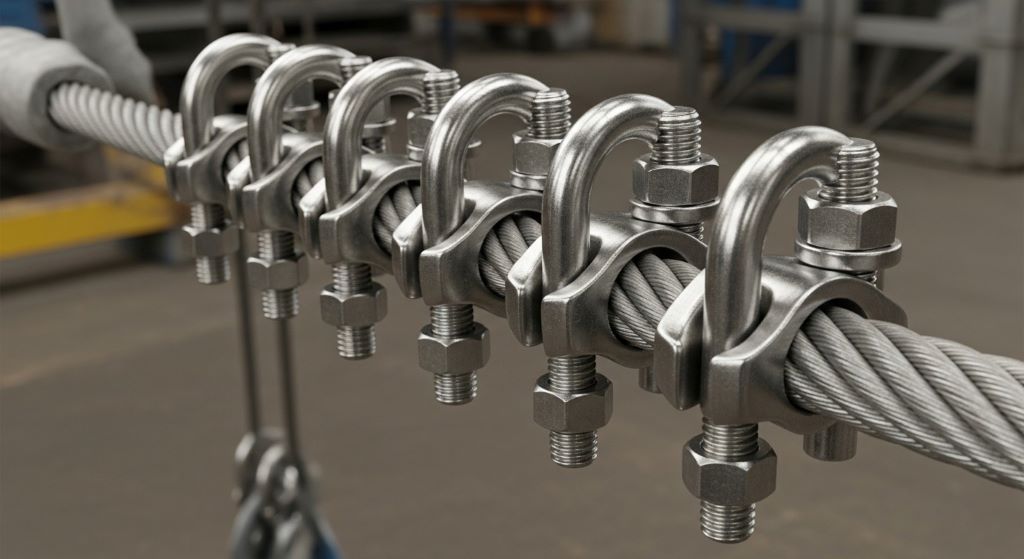
U-bolt clamps, also called wire rope clips, are the most common type. They consist of a U-shaped bolt, a saddle, and two nuts. Multiple clips are installed along the rope to create a secure termination. They’re economical, easy to install, and widely available. However, they require proper spacing and torque to function correctly.
Wedge-type clamps use a tapered wedge that bites into the rope as load increases. The self-tightening action creates a secure hold that actually strengthens under load. These work well for applications with varying loads. Nevertheless, they’re more expensive than U-bolt designs and require specific installation procedures.
Lever-operated clamps allow quick attachment and release, making them ideal for applications requiring frequent rope changes. The mechanical advantage of the lever makes installation easier. They cost more than simpler designs but save time in operations with frequent setup changes.
Plate clamps sandwich rope between two plates, distributing pressure across a wider area. This design works well with softer synthetic ropes that might be damaged by concentrated pressure. The even pressure distribution extends rope life in repeated use applications.
Swivel clamps incorporate a rotating connection point that prevents rope twisting under load. Applications involving suspended loads that might rotate benefit from this design. The swivel mechanism adds complexity and cost but solves specific operational challenges.
Installation Requirements and Proper Usage
Even the highest quality clamps fail if installed incorrectly. Understanding proper installation procedures ensures your fasteners perform as designed.
Clean the rope thoroughly before installing clamps. Dirt, oil, or debris prevents proper grip and can accelerate wear. Use appropriate cleaning methods for your rope type, whether wire or synthetic. Allow synthetic rope to dry completely before clamping.
Follow the manufacturer’s torque specifications exactly when installing clamps. Under-torqued clamps slip under load. Over-torqued clamps damage rope and may break. Use a calibrated torque wrench rather than guessing or using feel. Re-torque clamps after initial loading, as rope compression often requires adjustment.
Install multiple clamps with correct spacing for U-bolt designs. Industry standards specify minimum numbers and spacing based on rope diameter and load. Typically, at least three clamps are required for wire rope terminations. The first clamp should be installed one rope diameter from the bitter end.
Orient clamps correctly with the saddle on the live or load-bearing side of the rope. The U-bolt goes on the dead or tail end. The saying “never saddle a dead horse” helps remember this critical detail. Incorrect orientation dramatically reduces holding strength.
Additionally, inspect installations regularly. Check for signs of slippage, rope damage, loose nuts, or corrosion. Establish an inspection schedule based on usage intensity and environmental conditions. Document inspections and maintain records for safety compliance.
Environmental Factors Affecting Performance
Operating environment significantly impacts clamp selection and longevity. Failing to account for environmental conditions leads to premature failure and increased maintenance costs.
Corrosive environments require clamps with appropriate protection. Salt water, chemicals, and even humidity cause corrosion that weakens metal components. Stainless steel or specially coated clamps extend service life in these conditions. However, even corrosion-resistant materials need regular inspection.
Temperature extremes affect both material properties and rope characteristics. High temperatures reduce strength in most materials. Cold temperatures make some materials brittle and prone to cracking. If you operate in extreme temperatures, verify that both clamps and rope maintain adequate properties across your range.
UV exposure degrades synthetic rope and can affect some protective coatings on metal clamps. Outdoor applications need UV-resistant components or regular replacement schedules. Consider protective covers or housing for clamps in exposed locations.
Abrasive conditions from dust, sand, or industrial particles accelerate wear. These particles work into moving parts of adjustable clamps and grind away at surfaces. Regular cleaning and lubrication extend service life in dusty environments. Sealed designs protect internal mechanisms better than open designs.
Furthermore, vibration from machinery or wind can loosen clamp fasteners over time. Use lock washers, thread-locking compounds, or self-locking nuts in high-vibration applications. Regular inspection becomes even more critical when vibration is present.
Compliance with Industry Standards and Regulations
Industrial operations must comply with various safety standards and regulations. Selecting clamps that meet applicable standards protects both workers and organizations from liability.
OSHA regulations in the United States specify requirements for rigging equipment, including rope clamps. These regulations mandate regular inspection, proper installation, and adequate safety factors. Familiarize yourself with current OSHA standards relevant to your industry and application.
ASME standards provide detailed specifications for lifting equipment. ASME B30.26 covers rigging hardware and includes requirements for clamps used in lifting applications. Following these standards ensures your equipment meets recognized safety benchmarks.
International standards like ISO and EN specifications apply to operations in global markets or international shipping. Products certified to these standards undergo testing to verify performance claims. Look for certification marks from recognized testing laboratories.
Industry-specific regulations may apply in certain sectors. Maritime operations follow Coast Guard regulations. Mining operations have MSHA requirements. Construction sites must meet local building codes. Research the specific regulations governing your industry and ensure compliance.
Additionally, maintain documentation proving compliance. Keep certificates of conformance, test reports, and inspection records. This documentation protects your organization during audits and provides evidence of due diligence if accidents occur.
Testing and Inspection Protocols
Regular testing and inspection prevent failures by identifying problems before they become critical. Establishing systematic protocols ensures nothing gets overlooked.
Pre-use inspection should occur before every critical lift or load. Visually examine clamps for cracks, corrosion, deformation, or loose components. Check rope for fraying, broken strands, kinks, or other damage. Never use equipment that shows signs of deterioration.
Periodic detailed inspections go beyond visual examination. Measure critical dimensions to detect wear. Check torque on fasteners to ensure they haven’t loosened. Some organizations perform dye penetrant or magnetic particle testing on critical components to detect hidden cracks.
Load testing verifies that equipment maintains its rated capacity. However, proof loading can actually damage components, so it should only be performed according to manufacturer recommendations and applicable standards. Over-testing can reduce service life without providing meaningful safety benefits.
Keep detailed inspection records documenting what was checked, when, by whom, and what was found. These records identify trends that predict failures before they occur. They also demonstrate compliance during audits and investigations.
Additionally, establish clear criteria for removing equipment from service. Define what findings require immediate replacement versus repair or continued monitoring. Train personnel to recognize critical versus minor issues. When in doubt, err on the side of caution and replace questionable components.
Cost Considerations and Long-Term Value
Price matters in equipment selection, but focusing solely on initial cost often leads to higher total ownership expenses. Evaluating true value requires considering multiple factors beyond purchase price.
Initial cost varies widely based on material, design complexity, and manufacturing quality. Basic carbon steel U-bolt clamps cost a fraction of precision-engineered stainless steel swivel designs. However, the cheaper option may require more frequent replacement or cause operational problems.
Installation labor represents a significant cost component. Complex designs requiring special tools or extensive setup time increase labor expenses. Quick-connect designs cost more upfront but save money through reduced installation time. Calculate total installation cost including labor when comparing options.
Maintenance expenses accumulate over equipment life. Clamps requiring frequent inspection, adjustment, or lubrication increase ongoing costs. Corrosion-prone materials need replacement more often. Factor these recurring expenses into your evaluation.
Failure costs can dwarf all other expenses combined. Equipment damage, production downtime, workplace injuries, and liability claims resulting from clamp failure cost exponentially more than buying appropriate equipment initially. Adequate safety margins provide insurance against catastrophic losses.
Furthermore, consider standardization benefits. Using fewer clamp types simplifies training, reduces inventory complexity, and streamlines purchasing. The operational efficiency gained through standardization may justify paying more for versatile designs that handle multiple applications.
Special Considerations for Specific Industries
Different industries present unique challenges requiring specialized approaches to clamp selection. Understanding industry-specific factors helps you make appropriate choices.
Maritime applications demand maximum corrosion resistance and reliability in harsh conditions. Salt water rapidly degrades inadequate materials. Additionally, maritime equipment must withstand constant motion and dynamic loads from waves and weather. Choose marine-grade materials and designs proven in salt water service.
Mining operations subject equipment to extreme forces, abrasive conditions, and often corrosive groundwater. Clamps must handle shock loads from blasting and rock movement. Sealed designs prevent contamination from dust and particles. Regular inspection becomes challenging in underground environments, so reliability is paramount.
Construction sites require versatility because applications change frequently. Clamps that handle multiple rope sizes and quick installation save time during setup changes. However, the temporary nature of many construction applications doesn’t justify premium prices. Balance capability with cost-effectiveness.
Entertainment rigging demands absolute reliability because failures occur over audiences. Industry standards in entertainment are particularly strict. Use only equipment specifically rated and certified for overhead lifting of personnel or equipment over occupied spaces. Documentation and inspection requirements are more stringent than general industrial applications.
Manufacturing facilities benefit from standardization and ease of maintenance. Choose clamps that maintenance teams can easily inspect and service. Compatibility with existing equipment simplifies inventory management. Consider automation compatibility if clamps will integrate with robotic systems.
Conclusion
Selecting heavy duty rope clamps for industrial applications requires careful consideration of multiple interconnected factors. Understanding the relationship between materials, load requirements, environmental conditions, and application-specific needs ensures you choose equipment that performs reliably and safely.
Industrial rope fasteners and load bearing clamps serve critical functions across diverse industries. The right selection protects workers, prevents equipment damage, and maintains operational efficiency. Conversely, inadequate clamps create safety hazards and costly failures that far outweigh any initial savings from cheaper alternatives.
Start with accurate load calculations including appropriate safety factors. Match clamp materials and designs to your operating environment and rope specifications. Ensure compliance with applicable industry standards and regulations. Establish rigorous inspection and maintenance protocols to catch problems before they become failures.
Remember that rope clamp selection isn’t a one-time decision. Regular evaluation ensures your equipment continues meeting operational needs as conditions change. Stay informed about new products and improved designs that might offer better performance or value. Invest in training so personnel understand proper installation, inspection, and usage procedures.
The investment in appropriate heavy duty rope clamps pays dividends through reliable operation, worker safety, and peace of mind. Take time to make informed decisions based on thorough understanding rather than simply choosing the cheapest or most convenient option. Your workers, operations, and bottom line will benefit from this thoughtful approach.
Frequently Asked Questions
How many rope clamps do I need for a secure connection?
The number of clamps required depends on rope diameter and load requirements. For wire rope, industry standards typically require at least three clamps for terminations. Larger diameter ropes may need four or more. Synthetic rope requirements vary by material and construction. Always follow manufacturer recommendations and applicable standards like OSHA or ASME guidelines for your specific rope size and application. Never use fewer clamps than specified, as this dramatically reduces connection strength.
What’s the difference between working load limit and breaking strength?
Working load limit represents the maximum load a clamp should carry during normal operations. Breaking strength is the load at which the clamp actually fails. The difference between these values is the safety factor, typically 3:1 to 5:1 for industrial applications. Never exceed the working load limit even though the breaking strength is higher. The safety factor accounts for wear, dynamic loads, installation variations, and unexpected conditions that occur in real-world use.
Can I reuse rope clamps after removing them?
This depends on clamp type and condition. U-bolt clamps often deform during installation and shouldn’t be reused. The threads may be damaged, or the metal work-hardened. However, some lever-operated and wedge designs are specifically made for reuse. Always inspect clamps thoroughly before reinstalling. Check for deformation, thread damage, cracks, and corrosion. When equipment safety is critical, many organizations replace clamps rather than reusing them to eliminate any uncertainty about condition.
How often should I inspect rope clamps in service?
Inspection frequency depends on usage intensity and environmental conditions. High-use equipment in harsh environments needs daily or weekly inspection. Less critical applications in controlled environments might require only monthly or quarterly inspection. OSHA requires inspection before each use for lifting equipment. Establish a formal inspection schedule documented in writing. Train personnel on what to look for and when to remove equipment from service. More frequent inspection is always safer than less frequent.
Do stainless steel clamps work with galvanized wire rope?
Yes, stainless steel clamps work with galvanized wire rope. However, the combination can create galvanic corrosion where dissimilar metals contact each other, especially in marine or wet environments. The zinc coating on galvanized rope acts as a sacrificial anode, protecting the steel underneath but corroding faster when in contact with stainless steel. For maximum corrosion resistance in critical applications, match clamp material to rope material. In less demanding applications, the combination works adequately with regular inspection for corrosion.
Related Topics:
Youth Lasso Rope Review: Just Jump It Lil Lariat Tested
How to Properly Store and Maintain Exercise Rope for Maximum Longevity