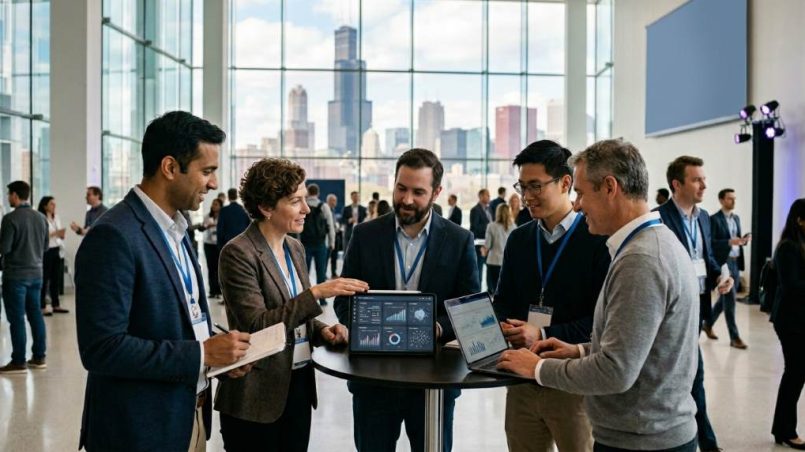
Chicago has become one of the fastest-growing technology hubs in the Midwest. According to CompTIA, the Chicago metro area supports thousands of tech companies and continues to expand its data-driven workforce every year. At the same time, Gartner reports that more than 75% of organizations now prioritize AI adoption in their business strategies. Because of this shift, data professionals in Chicago, IL are attending conferences, networking sessions, and innovation meetups to sharpen their analytics capabilities. Many teams also explore industry-focused gatherings like the data and AI summit USA to understand how advanced analytics can improve business decisions and operational performance.
Why AI Events Matter for Data Professionals in Chicago
Data professionals in Chicago work in industries like healthcare, logistics, finance, manufacturing, and retail. These sectors generate massive amounts of structured and unstructured data every day. Therefore, companies need smarter analytics systems to turn that information into business value. AI-focused events help professionals discover modern tools that support faster and more accurate decision-making.
Many organizations now struggle with fragmented data systems and outdated reporting methods. As a result, analysts and engineers seek practical solutions from industry peers and technology leaders. AI events provide direct exposure to real-world case studies and implementation strategies. Moreover, they help teams understand which AI models work best for specific business environments.
Chicago also offers a unique business landscape for data innovation. The city experiences rapid seasonal changes, including harsh winters and hot summers, which impact supply chains and consumer behavior. Consequently, local businesses rely heavily on predictive analytics to manage inventory, transportation, and staffing levels. AI events often showcase climate-responsive analytics strategies that fit Chicago-based operations.
How Chicago Companies Are Building Smarter Analytics Strategies
Using Predictive Analytics for Business Planning
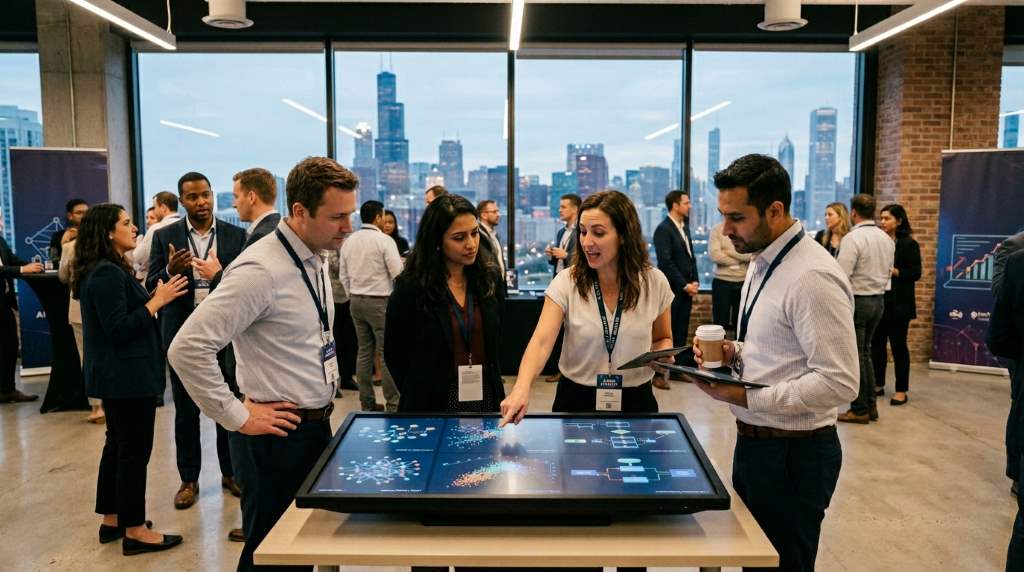
Predictive analytics has become one of the most discussed topics at AI conferences. Companies use machine learning models to forecast customer behavior, product demand, and financial trends. In Chicago, retailers often analyze seasonal buying patterns to prepare for winter shopping spikes and summer tourism activity. This approach reduces waste while improving revenue forecasting.
Healthcare organizations also rely on predictive analytics to improve patient outcomes. Hospitals in Chicago analyze patient admission trends during extreme weather conditions and flu seasons. Therefore, medical teams can allocate resources more effectively and reduce operational pressure. AI events frequently highlight these healthcare applications because they offer measurable business impact.
Financial institutions in Chicago use predictive systems to identify fraud risks and customer churn. These organizations analyze transaction behavior in real time to detect unusual activity. As a result, banks can reduce security threats while improving customer trust. Many professionals attend AI summits specifically to learn about these advanced risk-management techniques.
Improving Data Visualization and Reporting
Traditional dashboards often fail to provide deep business insights. Because of this limitation, Chicago-based data teams now focus on AI-powered visualization tools. These systems automatically identify patterns, anomalies, and trends that human analysts may overlook. Consequently, executives receive faster and more actionable reports.
AI events often include live demonstrations of modern business intelligence platforms. Attendees learn how natural language processing can simplify reporting workflows. Instead of manually building complex reports, professionals can ask systems direct questions and receive instant insights. This capability significantly improves productivity for analytics teams.
Manufacturing companies in Chicago also use advanced dashboards to monitor equipment performance. AI systems analyze machine data and predict maintenance needs before failures occur. Therefore, businesses reduce downtime and improve operational efficiency. These practical examples help event attendees apply similar strategies within their own organizations.
The Role of Networking at AI Events
Building Industry Connections
Networking remains one of the biggest advantages of attending AI-focused events. Data professionals often connect with analysts, engineers, consultants, and technology vendors during workshops and panel discussions. These relationships frequently lead to collaborations and career opportunities. Furthermore, peer discussions provide valuable insights that are difficult to find in online tutorials.
Chicago professionals benefit from strong regional business communities. Many companies in the city actively invest in data modernization initiatives. Therefore, AI events create opportunities for professionals to discuss shared challenges and solutions. This exchange of ideas accelerates innovation across multiple industries.
Young professionals and recent graduates also gain significant advantages from networking opportunities. Mentorship conversations often happen during breakout sessions and informal gatherings. As a result, new talent can learn directly from experienced industry leaders. These interactions help build confidence and practical business knowledge.
Learning From Real Business Use Cases
One major reason professionals attend AI events involves access to real implementation stories. Speakers often share both successes and failures from large-scale analytics projects. Therefore, attendees gain realistic expectations about AI adoption timelines and challenges. This information helps businesses avoid costly mistakes.
Retail companies in Chicago commonly discuss customer personalization strategies during AI conferences. Many organizations use recommendation engines and customer segmentation models to improve marketing performance. Consequently, businesses can increase customer retention while lowering acquisition costs. These examples provide actionable insights for other companies exploring similar solutions.
Transportation and logistics firms also share valuable case studies at AI gatherings. Chicago serves as a major transportation hub with extensive rail, air, and trucking networks. Therefore, companies rely heavily on AI-driven route optimization and demand forecasting systems. These discussions remain highly relevant for businesses managing complex supply chains.
Key Technologies Highlighted at AI Events
Machine Learning Platforms
Machine learning tools dominate conversations at analytics conferences. Businesses use these platforms to automate data analysis and improve prediction accuracy. Chicago organizations often prioritize scalable systems that integrate with existing enterprise infrastructure. Consequently, cloud-based machine learning services continue gaining popularity.
Many events include hands-on workshops for machine learning implementation. Attendees learn how to train models, clean datasets, and evaluate performance metrics. This practical training helps professionals apply new techniques immediately after returning to work. Additionally, workshops reduce the intimidation factor often associated with advanced AI systems.
Companies also discuss governance and compliance during these sessions. Financial and healthcare organizations in Chicago face strict regulatory requirements regarding data privacy and security. Therefore, professionals need AI systems that support transparency and ethical decision-making. Events often address these concerns through expert-led discussions.
Generative AI and Automation
Generative AI has quickly become a central topic in analytics strategy discussions. Businesses now use AI tools to automate content generation, customer support, and data summarization. Consequently, teams can focus more on strategic analysis rather than repetitive tasks. Chicago companies increasingly experiment with these technologies to improve operational efficiency.
AI automation also supports faster business reporting cycles. Instead of spending days preparing presentations, teams can generate insights within minutes. Therefore, executives receive timely information for decision-making. This speed advantage becomes especially valuable in competitive industries like finance and retail.
Several organizations in Chicago also use generative AI for internal knowledge management. Employees can quickly retrieve documentation, policies, and operational guidelines using AI-powered search systems. As a result, businesses improve productivity and reduce information bottlenecks. AI events frequently demonstrate these practical workplace applications.
How AI Events Support Career Growth
Expanding Technical Skills
Data professionals must constantly update their technical knowledge because AI technologies evolve rapidly. Conferences and workshops provide structured learning opportunities that combine theory with practical application. Therefore, attendees can strengthen both technical and strategic capabilities. Many employers also encourage conference participation as part of professional development programs.
Chicago-based analysts often attend specialized sessions on cloud computing, automation, and big data architecture. These skills remain highly valuable across multiple industries. Consequently, professionals who stay informed about emerging technologies gain stronger career prospects. AI events help bridge the gap between academic learning and real business implementation.
Certifications and training sessions also attract many attendees. Some conferences include hands-on labs that allow participants to experiment with new software tools. This experience builds confidence and improves technical adaptability. Additionally, it helps professionals remain competitive in a rapidly changing job market.
Understanding Leadership and Strategy
Technical expertise alone no longer guarantees success in analytics roles. Business leaders now expect data professionals to contribute to organizational strategy and innovation. Therefore, AI events often include leadership-focused discussions about communication, project management, and business alignment. These sessions help attendees become stronger strategic contributors.
Executives in Chicago increasingly rely on analytics teams for high-level business planning. Data professionals who understand operational goals can provide more valuable recommendations. Consequently, companies seek employees who combine technical knowledge with strong business awareness. AI conferences support this development through expert presentations and collaborative discussions.
Leadership panels also address organizational change management. Many businesses struggle with employee resistance during AI adoption initiatives. Therefore, professionals learn how to communicate benefits clearly and encourage collaboration across departments. These soft skills remain essential for successful digital transformation projects.
Challenges Discussed at Chicago AI Events
Managing Data Quality Issues
Poor data quality remains one of the biggest barriers to successful AI implementation. Many organizations struggle with incomplete, inconsistent, or outdated datasets. As a result, machine learning models may produce unreliable predictions. AI events frequently address strategies for improving data governance and accuracy.
Chicago businesses often operate across multiple departments and legacy systems. Consequently, integrating data sources becomes a major technical challenge. Experts at conferences usually recommend standardized data management frameworks to improve consistency. These recommendations help organizations build more reliable analytics environments.
Weather-related disruptions can also impact data collection and operational forecasting in Chicago. Heavy snowstorms and transportation delays affect supply chain performance and consumer activity. Therefore, businesses must continuously update models with real-time environmental data. AI events often highlight these location-specific challenges and solutions.
Balancing Innovation With Security
AI adoption introduces new cybersecurity and privacy concerns for businesses. Organizations must protect sensitive customer and operational data while still enabling advanced analytics capabilities. Therefore, many AI events include discussions about encryption, compliance, and risk management. These sessions help companies build secure analytics frameworks.
Financial and healthcare sectors in Chicago face particularly strict regulatory requirements. Consequently, professionals must understand how to implement AI responsibly and transparently. Conferences often feature legal experts and compliance specialists who explain current regulations. This guidance helps organizations reduce legal and operational risks.
Ethical AI also remains an important topic at industry events. Businesses want systems that avoid bias and support fair decision-making. Therefore, professionals learn how to evaluate algorithms for transparency and accountability. These conversations help strengthen public trust in AI technologies.
Practical Tips for Professionals Attending AI Events
Professionals should prepare clear learning goals before attending conferences or workshops. Identifying specific challenges helps attendees focus on the most relevant sessions and networking opportunities. Therefore, event participation becomes more productive and actionable. Preparation also prevents information overload during busy conference schedules.
Attendees should actively engage with speakers and fellow participants throughout the event. Asking thoughtful questions often leads to deeper insights and valuable professional connections. Moreover, networking conversations frequently continue after conferences through online communities and partnerships. These relationships can support long-term career growth.
Taking organized notes during sessions also improves knowledge retention. Many professionals create action plans immediately after events to apply new ideas within their organizations. Consequently, businesses see faster returns from conference participation. This approach transforms inspiration into measurable operational improvements.
The Future of AI and Analytics in Chicago
Chicago will likely continue expanding as a major analytics and AI innovation hub over the next decade. The city already supports strong finance, healthcare, logistics, and manufacturing sectors that depend heavily on data-driven operations. Therefore, demand for skilled analytics professionals will continue rising. AI events will remain critical for sharing knowledge and accelerating innovation.
Hybrid work environments also increase the need for advanced analytics strategies. Companies now analyze employee productivity, customer behavior, and digital engagement across multiple channels. Consequently, AI tools must become more flexible and scalable. Events provide opportunities to explore these evolving business requirements.
Sustainability initiatives may also influence future analytics strategies in Chicago. Businesses increasingly track energy consumption, transportation efficiency, and environmental impact through AI systems. Therefore, analytics professionals will play an important role in supporting corporate sustainability goals. AI-focused gatherings will continue driving these conversations forward.
Conclusion
Data professionals in Chicago, IL are using AI events to transform the way organizations approach analytics, automation, and business strategy. These gatherings provide access to emerging technologies, practical implementation advice, and valuable industry connections. As companies continue investing in data-driven decision-making, professionals who engage with AI communities gain a significant competitive advantage. Whether working in healthcare, finance, retail, or logistics, analytics teams can use these insights to build smarter and more scalable strategies. Start exploring upcoming AI events today and position your organization for long-term innovation and growth.
FAQs
Why do data professionals attend AI events in Chicago?
They attend to learn new analytics strategies, network with experts, and discover emerging AI technologies.
How do AI events improve analytics strategies?
These events provide practical case studies, training sessions, and real-world implementation insights.
Which industries in Chicago benefit most from AI analytics?
Healthcare, finance, logistics, manufacturing, and retail benefit heavily from AI-powered analytics.
What skills can professionals gain from AI conferences?
Professionals can improve machine learning, data visualization, automation, and strategic planning skills.
Are AI events useful for beginners in analytics?
Yes, many events offer beginner-friendly workshops, networking opportunities, and educational sessions.
ALT Text Suggestions:
- Data professionals in Chicago attending an AI analytics conference and discussing machine learning strategies
- Business analysts in Chicago using AI dashboards and predictive analytics tools during a tech event
- Chicago technology conference focused on AI-driven data analytics and business intelligence solutions
- Data science professionals networking at an AI summit in Chicago with presentations on smart analytics
Related Reads
Discover: Why are Cardboard Packages Ideal for Health and Beauty Businesses?