
Surfboard bags are one of the most practical investments any surfer can make. Whether you travel often or simply need reliable board storage at home, the right bag protects your board from damage, UV rays, and the general wear of daily use. However, with so many options available today, choosing the right one can feel overwhelming. This guide walks you through everything you need to know before making a purchase.
Why a Good Surfboard Bag Matters
Your surfboard is not cheap. A quality board can cost hundreds — sometimes thousands — of dollars. Therefore, protecting it with a proper bag makes financial sense from day one.
Surfboard bags shield your board from:
- Sun damage and heat warping
- Dings and pressure dents during transport
- Moisture and humidity when stored long-term
- Scratches from rough surfaces
Additionally, a good bag makes carrying your board much easier. Most modern bags come with padded shoulder straps, handles, and accessory pockets. These small features add real convenience to your daily surf routine.
Types of Surfboard Bags: Knowing Your Options
Not all surfboard bags are the same. There are three main types, and each serves a different purpose.
Day Bags (Socks)
Day bags, also called board socks, are the lightest and most affordable option. They are made from stretchy fabric — usually nylon or polyester — and slip over your board like a sleeve. They offer basic protection against light scratches and UV exposure. However, they provide very little padding. Therefore, they are best for short trips from your car to the beach, not for air travel or rough handling.
Travel Bags
Travel bags are the most heavy-duty option. They feature thick foam padding — typically 5mm to 10mm — along with reinforced stitching, lockable zippers, and generous extra pockets. If you fly with your board regularly, a travel bag is essential. Airlines handle luggage roughly, and without proper padding, your board can crack or delaminate in the hold. These bags are bulkier, but the protection they offer is worth every extra pound.
Coffin Bags
Coffin bags hold multiple boards at once — usually two to four. They are ideal for surfers who travel with a quiver or who run surf camps. They are large and heavy, but they make excellent board storage solutions when you need to transport a full set of boards in one trip.
Key Features to Look for When Buying
Once you know what type of bag you need, it is time to look at specific features. Here are the most important ones.
Padding Thickness
Padding is your board’s first line of defense. For day bags, 2mm to 3mm of padding is usually enough. For travel, look for at least 5mm. Some premium travel bags offer 10mm of padding on the nose and tail — the areas most prone to impact.
Material Quality
The outer material should be durable and water-resistant. Ripstop nylon and heavy-duty polyester are popular choices. Additionally, look for heat-reflective silver or white liners inside the bag. These reflect sunlight and prevent heat buildup, which can warp your board on hot days.
Zipper Durability
Cheap zippers are one of the first things to fail on a surfboard bag. Look for YKK zippers or equivalent heavy-duty brands. Lockable zipper pulls are a bonus if you check your board on flights.
Size and Fit
Your bag should match your board’s dimensions as closely as possible. Most bags list dimensions in length and width. A bag that is too loose allows the board to slide around inside, defeating the purpose of the padding. Many brands make bags in 1-inch increments, so measure your board carefully before ordering.
Straps and Handles
Dual padded shoulder straps make a huge difference on longer walks. Reinforced grab handles on the nose and tail are also useful for quick lifts. Check that the strap attachment points are reinforced with bartack stitching — this prevents tearing under heavy loads.
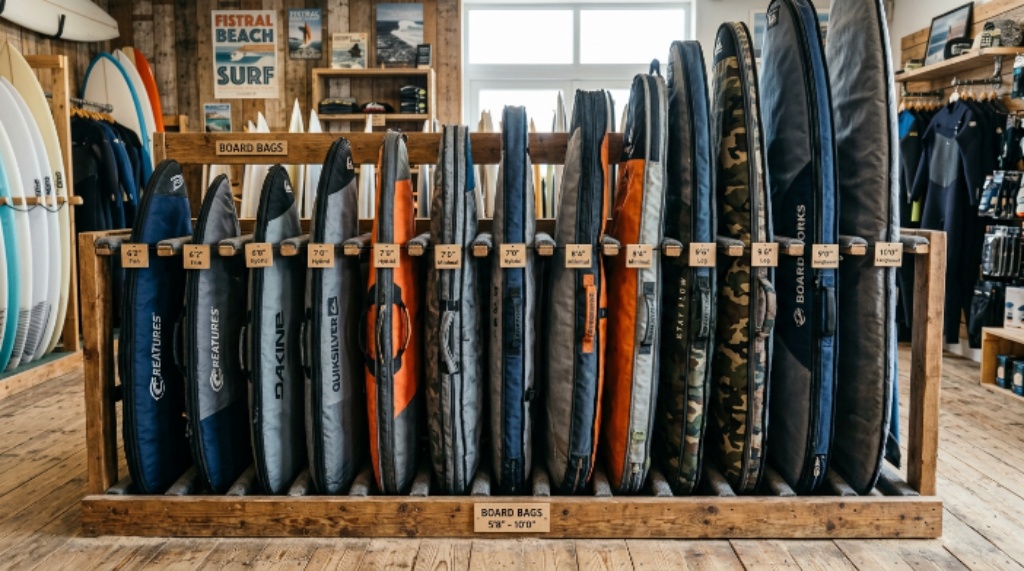
Matching Your Bag to Your Board Shape
Different board shapes require different bag styles. This is one of the most overlooked surf gear shopping tips among beginners.
Shortboards have tapered noses and narrow tails, so a standard shortboard bag will fit them well. Longboards, however, require specially designed bags that accommodate their extra length and wider nose. Fish boards and mid-lengths often need a slightly wider bag due to their full outline. Always check the width measurements, not just the length.
If you ride an odd-shaped board — like a single fin or a specialty retro shape — consider a custom bag. Several brands offer made-to-order options that are worth the extra cost.
Budget Guide: How Much Should You Spend?
Surfboard bags range from about $20 for a basic sock to over $300 for a premium travel coffin. Here is a rough breakdown.
- Under $50: Basic day socks and light travel covers. Fine for local surfers who drive to the beach.
- $50 to $150: Mid-range travel bags with decent padding and features. A solid choice for occasional travelers.
- $150 to $300+: Premium travel bags with thick padding, reinforced construction, and extra pockets. Worth it if you fly with your board several times a year.
Remember that a $200 travel bag can save you from a $600 board repair after a rough flight. Think of it as insurance.
Top Brands to Consider in 2026
Several brands consistently receive high marks for quality and durability. FCS, Creatures of Leisure, and Dakine are among the most trusted names in surfboard bags. Ocean & Earth and Curve are also strong options, particularly for travel bags. Each brand offers a range of products across different price points, so you can find something that fits your needs without overspending.
When reading reviews, pay attention to long-term durability reports. A bag might look great in photos but fail after six months of heavy use. Look for feedback from surfers who have traveled frequently with the bag.
Practical Board Storage Tips for Home Use
Buying a bag is only half the equation. How you store your board at home matters just as much. These board storage habits will extend the life of both your board and your bag.
Always store your board in a cool, dry place away from direct sunlight. Heat and UV exposure cause boards to yellow, delaminate, and warp over time. A garage can work, but avoid leaving your board near a window or in a car on hot days.
Store boards flat or on a padded rack. Leaning them against a wall for extended periods can cause the tail to warp. If you use a wall rack, make sure it has padded contact points. Additionally, keep your bag clean by rinsing it with fresh water after beach trips. Salt and sand can degrade zippers and stitching over time.
Conclusion
Buying the right surfboard bag comes down to understanding your needs, your board type, and your budget. Day bags work for casual local surfers, while travel bags are essential for anyone who flies with their gear. Focus on padding thickness, material quality, zipper durability, and a good fit. Following smart board storage habits at home will further extend the life of your investment. By applying these surf gear shopping tips and choosing wisely, you will protect your board for years to come and enjoy worry-free surfing wherever the waves take you.
Frequently Asked Questions
What is the difference between a surfboard sock and a travel bag?
A surfboard sock is a thin, lightweight cover for basic scratch and UV protection. A travel bag has thick foam padding, reinforced zippers, and extra pockets designed to protect your board during air travel or rough transport.
How do I measure my surfboard for a bag?
Measure the length from the very tip of the nose to the end of the tail. Also measure the widest point of the board. Compare these numbers to the bag’s listed dimensions. Always err on the side of a slightly longer bag rather than one that is too tight.
Can I use one bag for multiple board shapes?
A coffin or multi-board bag can hold different shapes. However, individual bags are shaped for specific board types, so mixing shapes in a single-board bag may result in a poor fit and reduced protection.
How much padding do I need for flying with my surfboard?
Aim for at least 5mm of padding throughout the bag, with reinforced nose and tail sections. Some travel bags offer up to 10mm in high-impact zones, which is ideal for checked airline luggage.
How should I clean and maintain my surfboard bag?
Rinse the bag with fresh water after each beach trip to remove salt and sand. Allow it to air dry completely before storing it. Periodically check the zippers for corrosion and apply zipper lubricant to keep them running smoothly.
Related Topics:
How to Pack Surf Gear for Your Next Surf Trip
Golf Bag Buying Guide: How to Choose the Right Model