Key Takeaways
- Proof testing assures the safety and reliability of critical equipment used in various industries.
- Regular proof testing can prevent costly accidents and meet regulatory requirements.
- Understanding modern proof testing practices helps organizations make better decisions about equipment management.
- Technological advancements continue to shape proof testing methods and standards worldwide.
What Is Proof Testing?
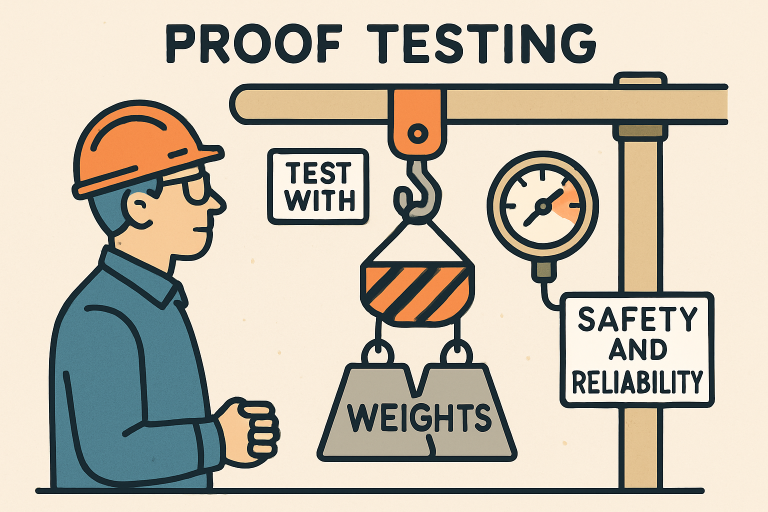
Proof testing is a systematic evaluation process to verify critical equipment’s safety, condition, and functionality under controlled, elevated loads or pressures. This important process ensures that materials, assemblies, and components can perform as designed before being deployed in real-world conditions. Applications include everything from infrastructure to manufacturing, where the integrity of installed elements is vital to safe operation. For industries that demand heightened reliability, industrial pressure testing assures that each component can withstand its intended operational demands.
Companies can identify manufacturing defects, material flaws, or assembly weaknesses that might otherwise cause catastrophic failures by applying proof testing before critical machinery or structures are commissioned.
Why Proof Testing Is Essential for Safety
Safety is the guiding principle behind proof testing. According to the National Safety Council, equipment and structural failures continue to be among the top causes of workplace injury and fatality. Implementing thorough proof testing protocols creates a robust safety net, dramatically lowering the chance of hidden faults resulting in accidents. It represents the final safeguard before equipment is put into service, ensuring that only strong, well-constructed components are used in environments where failure is not an option.
- Reduces the risk of workplace accidents by confirming load-carrying capabilities.
- Protects capital investments by preventing unexpected breakdowns that can halt production or lead to significant repair costs.
- Supports regulatory and legal compliance when safety documentation is needed for audits or insurance claims.
Ultimately, proof testing’s value is turning potential weaknesses into non-events, safeguarding both people and assets.
Regulatory Guidelines and Industry Standards
Proof testing practices must conform to rigorous local, national, and international safety standards. Regulatory bodies such as OSHA and global organizations including the American Society of Mechanical Engineers (ASME) set clear mandates regarding inspection intervals, test methods, and reporting. Comprehensive awareness of these regulations avoids costly penalties and aligns organizations with industry best practices.
Modern Methods and Equipment Used in Proof Testing
Technological innovation is revolutionizing proof testing. Advanced mechanical methods, such as hydrostatic and pneumatic testing, have become industry standards for validating pressure vessels, pipelines, and hoses. Non-destructive testing methods—including ultrasonic, magnetic particle, and dye penetrant inspections—are widely adopted to detect micro-cracks or internal flaws without damaging the tested components.
Recent advancements also include adopting smart digital sensors and automated load cell technology, which provide real-time monitoring and data recording. Digital record-keeping enhances traceability, allowing for more comprehensive lifecycle management of critical assets.
Key Industries That Rely on Proof Testing
Several high-stakes sectors depend on proof testing to guarantee their machinery and infrastructure perform reliably:
- Construction: Large lifting slings, cranes, hoists, and structural components require regular proof testing before operation.
- Oil & Gas: Pressure piping, wellheads, and valves are commonly tested under simulated loads to confirm their ability to endure demanding environments.
- Manufacturing: Assembly line machinery, robotics, and specialized lifting devices are tested for consistent and safe performance.
- Transportation: Key bridge structures, train couplers, and marine equipment are extensively tested to protect public safety and infrastructure investments.
The consequences of skipping proof testing are severe. History shows that inadequate testing can result in major financial losses, environmental disasters, and preventable injuries. The largest companies in these fields invest significantly in robust proof testing programs as part of their overall risk management strategy.
Best Practices for Effective Proof Testing
- Develop and strictly adhere to a comprehensive proof testing schedule influenced by equipment type, service conditions, and past performance data.
- Continually train employees and supervisors on the latest testing protocols and regulatory requirements.
- Maintain thorough, up-to-date documentation of every test, capturing results, anomalies, and any corrective actions.
- Analyze testing data to identify trends or recurring issues, creating opportunities for process improvements and early intervention.
- Invest regularly in modern testing equipment and digital record-keeping solutions to meet evolving industry benchmarks.
Organizations minimize safety shortfalls and optimize equipment longevity by instilling these best practices as a routine part of operational culture.
Final Thoughts
Proof testing is the silent guardian of industrial safety and reliability. It supports compliance, reduces the likelihood of unexpected failures, and bolsters confidence in complex systems that millions depend on daily. Staying current with best practices and advancements, such as non-destructive testing principles, empowers companies to protect their workforce, assets, and reputation. As industries push toward smarter, more resilient infrastructures, proof testing will remain a cornerstone of operational excellence for years.