Standing waist-deep in a crystal-clear mountain stream, watching for the subtle rise of a trout, requires more than just skill and patience. Your ability to see beneath the water’s surface can make the difference between a successful day and going home empty-handed. Choosing the right sunglasses for fly fishing isn’t just about comfort or style. It’s about enhancing your vision and protecting your eyes while you pursue your passion.
Many anglers underestimate how critical proper eyewear is to their success. The right pair of sunglasses helps you spot fish, read water currents, see underwater structures, and protect your eyes from harmful UV rays and flying hooks. This comprehensive guide will walk you through everything you need to know about selecting the perfect sunglasses for fly fishing in clear streams.
Understanding Why Sunglasses Matter for Stream Fishing
Clear streams present unique visual challenges that make quality sunglasses essential. Water reflects sunlight, creating glare that obscures what lies beneath the surface. Without proper eyewear, you’re essentially fishing blind, missing crucial information about fish location and behavior.
Sunglasses designed for fishing do more than reduce brightness. They cut through surface glare, allowing you to see into the water column. This visibility helps you spot trout holding in feeding lanes, identify underwater structures where fish hide, and observe how your fly drifts through the current.
Additionally, eye protection becomes critical when you’re casting flies with weighted nymphs or streamers. A poorly executed cast can send a hook traveling at high speed toward your face. Quality sunglasses with impact-resistant lenses provide a safety barrier that could save your eyesight.
UV protection is another essential factor. Water reflects UV rays, effectively doubling your exposure. Spending hours on the water without adequate protection can lead to serious eye damage over time, including cataracts and macular degeneration.
Lens Color and How It Affects Your Vision
The color of your sunglass lenses dramatically impacts what you can see in different water conditions. Understanding which tint works best in various situations helps you make an informed choice.
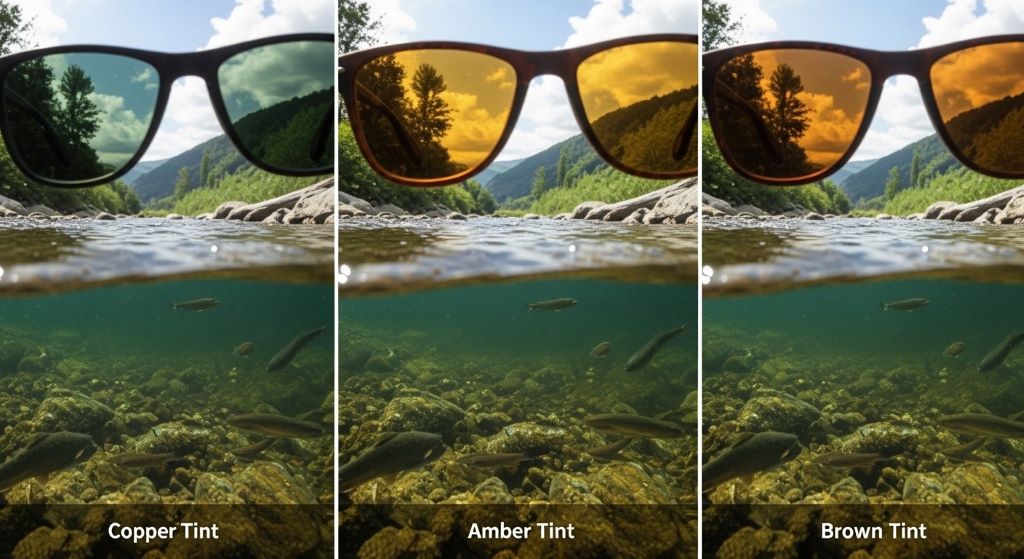
Copper and amber lenses excel in most stream fishing situations. These warm tones enhance contrast, making it easier to distinguish rocks, gravel, and fish against the stream bottom. They work particularly well in partly cloudy conditions or when fishing during morning and evening hours.
Gray lenses provide true color perception and work well in bright, sunny conditions. However, they offer less contrast enhancement than warmer tints. Many anglers prefer gray lenses for open water fishing but find them less effective in streams where seeing detail matters most.
Yellow and green lenses shine in low-light conditions. If you fish early mornings or on overcast days, these tints brighten your view and enhance contrast. They’re particularly useful when fishing under heavy canopy where light is limited.
Brown lenses offer a versatile middle ground. They provide good contrast enhancement while maintaining relatively natural color perception. Many experienced anglers consider brown lenses the best all-around choice for stream fishing.
Blue and purple lenses help in extremely bright conditions and can reduce eye fatigue. However, they’re less common among serious fly fishers because they don’t enhance underwater visibility as effectively as warmer tones.
Polarization Is Non-Negotiable
Polarized lenses are absolutely essential for fly fishing in clear streams. This isn’t a nice-to-have feature but rather a fundamental requirement that separates fishing sunglasses from regular eyewear.
Polarization works by filtering out horizontal light waves, which create glare when sunlight bounces off water surfaces. By eliminating this glare, polarized lenses allow you to see through the water’s surface rather than just seeing a mirror-like reflection.
The difference is remarkable. With polarized lenses, you can spot trout holding in current seams, see your fly drifting downstream, and identify underwater rocks and logs. Without polarization, you’re missing most of the visual information that makes you a more effective angler.
Not all polarized lenses are created equal, however. Quality matters significantly. Cheap polarized sunglasses often have inconsistent polarization across the lens surface, creating distortion. They may also use lower-quality materials that scratch easily or lose their polarizing properties over time.
Look for sunglasses with high-quality polarization that covers the entire lens evenly. Test them in the store by looking at reflective surfaces or LCD screens, which will appear dark or show patterns when viewed through properly polarized lenses.
Lens Material and Durability Considerations
The material your lenses are made from affects everything from clarity and weight to durability and cost. Each material offers distinct advantages and disadvantages for stream fishing.
Glass lenses provide superior optical clarity and scratch resistance. They maintain their clarity over years of use and offer the best visual experience. However, glass is heavy and can shatter on impact, making it less ideal for active sports like fly fishing.
Polycarbonate lenses offer excellent impact resistance and lighter weight. They’re virtually shatterproof, making them the safest option when casting flies. The downside is that polycarbonate scratches more easily than glass and may not provide quite the same optical clarity.
Trivex lenses combine many benefits of both glass and polycarbonate. They’re lighter than glass, more impact-resistant, and offer better optical clarity than polycarbonate. They also resist scratches better than polycarbonate, though not quite as well as glass. This makes Trivex an excellent choice for lightweight fishing eyewear.
Acrylic lenses are the most affordable option but offer the lowest quality. They scratch easily, provide inferior optical clarity, and don’t stand up well to regular use. Most serious anglers avoid acrylic lenses entirely.
Consider your priorities when choosing lens material. If you value clarity above all else and fish carefully, glass works well. For most anglers, polycarbonate or Trivex offers the best balance of performance, safety, and durability.
Frame Design and Fit for All-Day Comfort
Even the best lenses won’t help if your sunglasses are uncomfortable or don’t stay in place. Frame design plays a crucial role in your overall fishing experience.
Wrap-around frames provide the most complete protection from sunlight and glare. They block light from entering around the sides of the lenses, which is particularly important when the sun sits low on the horizon. This design also offers better protection from wind and flying insects.
However, wrap-around frames can sometimes create distortion at the edges of your peripheral vision. Quality fishing sunglasses minimize this issue through careful lens curvature design. Try on different models to find one that provides coverage without noticeable distortion.
Frame weight matters when you’re wearing sunglasses for eight or ten hours. Lightweight materials like TR-90 nylon, titanium, or high-quality plastics reduce fatigue. Heavy frames create pressure points on your nose and ears that become increasingly uncomfortable throughout the day.
Adjustable nose pieces and temple tips help achieve a secure, comfortable fit. Everyone’s face is shaped differently, so the ability to customize the fit ensures your sunglasses stay in place when you’re wading through current or bending down to net a fish.
Side shields or extended coverage in the frame design prevents light from sneaking in around the edges. This becomes especially important when the sun is behind you or at acute angles where standard frames leave gaps.
Considering Your Specific Trout Fishing Gear Needs
Fly fishing involves unique movements and situations that affect your eyewear choice. Your sunglasses need to work seamlessly with the rest of your trout fishing gear and fishing techniques.
Consider how your sunglasses interact with your hat. Most fly fishers wear brimmed hats for additional sun protection. Your sunglasses should fit comfortably under your hat without the brim pushing them down your nose or creating pressure points.
If you wear prescription glasses, you have several options. Prescription fishing sunglasses offer the best solution but can be expensive. Fit-over sunglasses that wear over your regular glasses work well for some anglers, though they can be bulky. Prescription inserts that clip inside the sunglasses provide another alternative.
Retainer straps or croakies are essential accessories. When you’re wading in slippery streams, bending over to net fish, or moving through streamside brush, a retainer strap keeps your sunglasses secure. Choose one that’s comfortable and doesn’t pull on your ears.
Case quality matters more than most people realize. A hard case protects your investment when you’re not wearing your sunglasses. Fishing often involves rough conditions, and tossing your sunglasses loosely in a tackle bag is a recipe for scratched lenses.
Cleaning cloths and anti-fog solutions round out your eyewear system. Keep a microfiber cloth handy to wipe water droplets and remove smudges without scratching your lenses. Anti-fog treatments help when you’re fishing in humid conditions or moving between air-conditioned vehicles and warm streams.
Understanding Lens Technology and Coatings
Modern fishing sunglasses incorporate various technologies and coatings that enhance performance. Understanding these features helps you distinguish marketing hype from genuinely useful innovations.
Anti-reflective coatings on the back surface of lenses reduce glare from light bouncing off the inside of the lens into your eyes. This becomes important when the sun is behind you, as it prevents distracting reflections and improves overall visibility.
Hydrophobic coatings cause water to bead up and roll off rather than spreading across the lens surface. This is incredibly useful when fishing in rain or when water splashes on your sunglasses. Water droplets can severely impair your vision, and hydrophobic coatings minimize this problem.
Oleophobic coatings repel oils from fingerprints, sunscreen, and insect repellent. These coatings make cleaning easier and keep your lenses clearer throughout the day. They’re particularly valuable since you’ll inevitably touch your sunglasses with hands that have been handling fish, fly line, and various fishing products.
Mirror coatings on the outside of lenses provide additional glare reduction in extremely bright conditions. They reflect some light before it reaches the polarized layer, reducing eye fatigue. Some anglers prefer the look of mirrored lenses, while others find them unnecessary for stream fishing.
Scratch-resistant coatings extend the life of your sunglasses by protecting the lens surface from minor abrasions. However, no coating makes lenses completely scratch-proof. Proper care and storage remain important regardless of coating quality.
Evaluating Build Quality and Construction
The way sunglasses are constructed determines how long they’ll last under fishing conditions. Quality construction costs more upfront but saves money over time through increased durability.
Examine the hinges carefully. Quality sunglasses use spring hinges that flex outward without breaking or screwed hinges that can be tightened if they loosen. Cheap sunglasses often have glued hinges that fail after limited use.
Check how the lenses are secured in the frame. Better sunglasses use lenses that snap securely into place or are held with screws. Low-quality models may have lenses that pop out easily or are simply glued in place.
Look at the overall finish and attention to detail. Rough edges, uneven surfaces, or visible glue indicate poor manufacturing quality. Quality fishing sunglasses have smooth, professional finishes throughout.
Test the frame flexibility. Quality materials have some give without feeling flimsy. Frames should flex slightly when bent but return to their original shape. Brittle frames that feel rigid often crack under stress.
Consider the brand’s reputation and warranty. Established companies that specialize in fishing eyewear stand behind their products. A good warranty indicates confidence in build quality and provides protection for your investment.
Price Points and Value Considerations
Fishing sunglasses range from twenty dollars to several hundred dollars. Understanding what you’re paying for helps you make a wise investment.
Budget sunglasses under fifty dollars typically use basic materials and construction. They may offer polarization and decent UV protection but often lack durability and advanced features. These can work for casual anglers who fish occasionally but may disappoint serious fishers.
Mid-range options between fifty and one hundred fifty dollars often provide excellent value. Many quality brands offer sunglasses in this range with good polarization, durable construction, and useful features. This price point works well for most dedicated fly fishers.
Premium sunglasses above one hundred fifty dollars offer the best optical clarity, most durable construction, and advanced features. If you fish regularly and can afford the investment, premium sunglasses are worth the cost. They last longer and perform better, ultimately providing good value despite the higher initial price.
Think about cost per use rather than just purchase price. Sunglasses you wear for fifty days a year over five years cost just a few dollars per fishing day, even at premium prices. Quality fishing eyewear is one area where investing more often makes sense.
Testing Sunglasses Before You Buy
Whenever possible, try sunglasses before purchasing them. Online shopping offers convenience, but testing fit and vision quality in person provides valuable information.
Wear the sunglasses for at least ten minutes in the store. Initial comfort doesn’t guarantee all-day wearability. Pay attention to pressure points on your nose and ears. Notice whether the glasses slip down or feel secure.
Look at various objects and surfaces while wearing the sunglasses. Do colors look natural? Is your peripheral vision clear or distorted? Can you see fine details easily? These observations help you assess optical quality.
Test the polarization by looking at reflective surfaces. Car windows, floors, and electronic screens will appear different through properly polarized lenses. Rotate the glasses ninety degrees while looking at these surfaces to see the polarization effect.
Check the fit with a hat if you’ll be wearing one while fishing. Some sunglasses that fit perfectly alone don’t work well under a hat brim. This simple test can save you from discovering incompatibility on the water.
Move your head around while wearing the sunglasses. They should stay securely in place without sliding or bouncing. If they move around during casual head movements, they’ll be even worse when you’re actively fishing.
Caring for Your Investment
Proper maintenance extends the life of your sunglasses and keeps them performing at their best. Developing good care habits is just as important as choosing quality sunglasses initially.
Always rinse sunglasses with fresh water after fishing in streams. Even clear water contains minerals and sediments that can scratch lenses when wiped away dry. A quick rinse removes these particles safely.
Use only microfiber cloths designed for cleaning eyewear. Paper towels, shirts, and regular cloths can scratch lens coatings. Keep a microfiber cloth in your fishing vest or truck specifically for cleaning your sunglasses.
Store sunglasses in a hard case when not wearing them. Loose storage in tackle bags or vehicle consoles leads to scratched lenses and broken frames. A few seconds of care prevents damage that can’t be repaired.
Avoid leaving sunglasses in hot vehicles. Extreme heat can damage lens coatings and warp frame materials. Take them with you or store them in a cooler area.
Handle sunglasses by the frame, not the lenses. Touching lenses transfers oils from your skin, creating smudges that impair vision. If you must touch lenses, clean them promptly with appropriate cleaning solution and a microfiber cloth.
Adapting to Different Stream Conditions
Clear streams vary considerably depending on water clarity, depth, light conditions, and bottom composition. Understanding how to adapt your eyewear choice to different situations improves your effectiveness.
In extremely clear, shallow streams, darker lenses help reduce overall brightness while polarization cuts glare. These conditions create the most intense light reflection, requiring maximum protection and glare reduction.
Deeper pools in clear streams benefit from lighter tints that allow more light transmission. You need to see into darker water, and overly dark lenses can make this difficult. Copper or amber lenses with moderate darkness work well in these situations.
Heavily shaded streams under forest canopy require lighter lenses. Yellow or light copper lenses brighten your view without sacrificing contrast enhancement. Dark lenses in these conditions make it difficult to see into shadowed water.
Streams with slightly stained or tinted water benefit from the contrast enhancement of copper or amber lenses. These tints help you distinguish fish and structure in water that isn’t perfectly clear.
Consider carrying two pairs of sunglasses if you fish diverse conditions regularly. One pair with darker lenses for bright, open water and another with lighter lenses for shaded or low-light conditions covers most situations you’ll encounter.
Making Your Final Decision
Choosing sunglasses involves balancing multiple factors based on your specific needs and preferences. No single pair works perfectly for everyone or every situation.
Prioritize polarization and UV protection as non-negotiable features. These elements provide the fundamental benefits that make specialized fishing sunglasses worthwhile. Everything else builds on this foundation.
Consider your budget realistically. Quality lightweight fishing eyewear represents an investment in both your fishing success and eye health. However, you don’t necessarily need the most expensive option to get excellent performance.
Think about your typical fishing conditions. If you primarily fish bright, sunny streams, prioritize darker lenses with excellent polarization. If you often fish in varied light, consider lighter, more versatile tints.
Factor in comfort and fit heavily in your decision. The best optical performance won’t matter if your sunglasses give you a headache after two hours. Comfort enables all-day wear, which is when your sunglasses truly prove their value.
Don’t overlook personal preference. Some anglers strongly prefer certain lens colors or frame styles. If you’re choosing between two similarly performing options, pick the one you’re most excited to wear. You’ll use them more consistently if you genuinely like them.
Conclusion
Selecting the right sunglasses for fly fishing in clear streams involves understanding multiple factors from polarization and lens color to frame design and build quality. Quality eyewear enhances your ability to see fish, read water, and protect your eyes from harmful UV rays and potential injuries.
Remember that proper sunglasses are essential trout fishing gear, not just accessories. They directly impact your success on the water by allowing you to see what you couldn’t see otherwise. The investment in quality lightweight fishing eyewear pays dividends in improved fishing results and long-term eye health.
Take time to consider your specific needs, test different options when possible, and choose sunglasses that offer the right combination of optical performance, comfort, and durability for your fishing style. Proper care and maintenance will ensure your investment serves you well for many seasons of successful stream fishing.
By following the guidelines in this comprehensive guide, you’ll be equipped to make an informed decision that enhances every fishing trip and protects your vision for years to come.
Frequently Asked Questions
Do I really need expensive sunglasses for fly fishing?
While you don’t necessarily need the most expensive option, quality matters significantly for fishing sunglasses. Mid-range options between fifty and one hundred fifty dollars typically provide excellent performance for most anglers. The key is ensuring you get proper polarization, UV protection, and durable construction rather than simply buying the cheapest pair available.
Can I use regular polarized sunglasses instead of fishing-specific ones?
Regular polarized sunglasses can work, but fishing-specific sunglasses typically offer lens colors optimized for seeing into water and frame designs suited for active outdoor use. If your regular polarized sunglasses have appropriate lens tints like copper or amber and fit securely, they may work adequately. However, dedicated fishing sunglasses usually perform better for stream fishing.
What lens color is best for fishing in clear mountain streams?
Copper and amber lenses work best for most clear stream situations. These warm tints enhance contrast, making it easier to spot fish and underwater structures. Brown lenses offer a versatile alternative that works well in varied light conditions. For heavily shaded streams, lighter copper or yellow lenses provide better visibility.
How do I know if sunglasses are properly polarized?
Test polarization by looking at reflective surfaces like car windows, water, or LCD screens through the lenses. Properly polarized lenses will significantly reduce glare and may make LCD screens appear dark or show patterns. You can also stack two polarized lenses and rotate one ninety degrees. They should become nearly opaque when perpendicular to each other.
Should I choose glass or polycarbonate lenses for stream fishing?
Polycarbonate or Trivex lenses are generally better for stream fishing due to their impact resistance and lighter weight. While glass offers superior clarity and scratch resistance, its weight and potential to shatter make it less ideal for active fishing. Most modern polycarbonate and Trivex lenses provide excellent optical quality while being safer and more comfortable.
Related Topics:
The Concept Is The Basis Of Your Wedding
6 Really Beautiful Towns In Italy